4 How Scales and Intervals REALLY Work
4.1
Scales: Brain-averse, Brain-friendly
4.1.1
What Is a Music Scale? Discrete vs Continuous In Organizing Sound
Music scales are comprised of discrete pitches. Whether speaking or singing, humans automatically and effortlessly use discrete pitches,, with only the occasional slide. By contrast, our primate cousins, such as gibbons and chimpanzees, either vocalize in pitch glides (conttinuous sounds) or without distinct pitches—just grunts and pants.
Discrete pitches in speech and music, not continous sounds, serve to organize sound in such a way that the brain can recognize patterns and make sense of them. Once you have more than one discrete tone, you can have a scale of some sort.
Humans undoubtedly turned discrete tones into songs long before anybody recognized the existence of musical scales. At some point, it must have become clear that the tunes people remembered tended to use the same sets of notes: scales.
A tune or melody is a coherent or distinctive succession of tone pairs called intervals. The notes of a tune (melody) move up and down in pitch, stepping or leaping from note to note, using the same notes time after time, like stepping up and down the same staircase.
That means the notes themselves must come from some set of related notes of different pitches. This set of notes is called a scale. But how does the brain recognize a set of pitches as a scale?
4.1.2
Thought Experiment Using a Cello Fingerboard
Imagine you have a cello. (Maybe you do have a cello.) As you know, the fingerboard of a cello has no frets. Which makes the cello an ideal instrument for this thought experiment.
- Take a piece of imaginary white chalk and make some horizontal marks at random places along the fingerboard of your imaginary cello. Say, oh, maybe eight chalk marks.
- Remove the excess imaginary chalk from your fingers by wiping your hands on your black pants or dark skirt. Nobody will be able to see the chalk marks on your clothing because, even though your clothing is real, the chalk is imaginary
- Now, pick a string, any string. Press your finger on the string over the chalk mark nearest the narrow end of the fingerboard (the end nearest the tuning pegs). Pluck (or bow) that string. Then move to the next chalk mark. Pluck the string. Then the next chalk mark, and so on, until you’ve played all eight notes.
Good thing that was a thought experiment. Because the scale you created and played on your imaginary cello sucks. Your brain just does not recognize it as a meaningful scale. How come?
4.1.3
A Little Music Scale Theory: Why Random Scales Sound Bad
If you create a random scale, a scale comprised of notes having no natural, physical relationship with each other (the way you did using random chalk marks on the cello fingerboard), then try to play a tune using that scale, your brain interprets the sound as chaos, not music. Or just plain bad music.
Studies of both children and adults indicate your brain is hardwired at birth to reject random scales. Infants prefer non-random scales, as do adults. The frequencies of the notes comprising a scale have to have some kind of internal order—ordered relationships with each other—or your brain interprets the sound as noise.
But not just any ordered relationships.
Particular ordered relationships that your brain recognizes: “brain-friendly” ordered relationships of tones, as opposed to “brain-averse” chaotic non-relationships.
4.1.4
The Meaning of Overtones In Finding an Organizing Principle for Scale Construction
Recall that "overtones" means tones that comprise the harmonic series. And recall what happens when you pluck a guitar string that you’ve cut in halves, thirds, quarters, fifths, and so on, by damping the string over various frets. You get a whole series of soft overtones—overtones that sound different from the fundamental.
As the guitar-string-damping experiment reveals, each overtone not only sounds different, it also sounds good. Brain-friendly. So it would be a reasonable guess that a brain-friendly scale might have something to do with the relationships of overtones to each other.
Hmmm. Maybe relationships among the overtones hold the secret to finding an organizing principle that will yield a useful scale, a group of tones in a brain-friendly ordered relationship.
Time to bring back the overtone series and have a look at overtone frequency relationships (Table 8 below). Frequency relationships among the first few overtones, the strongest ones, are of greatest interest. They’re the ones you can hear by damping a guitar string at various fret positions.
Middle C: Overtone Series Chart
TABLE 8 Fundamental and First 15 Overtones of the “Middle C” Overtone Series

- Start with the ratio of the first overtone to the fundamental frequency, which is 523.2 Hz : 261.6 Hz, which boils down to a simple ratio of 2:1. This simple ratio comes from the first two numbers of the middle column.
Musical Scales: Frequency Ratios That Are Simple
- Next, the ratio of the second overtone to the first overtone. It’s 784.8 Hz : 523.2 Hz, a ratio of 3:2. (middle column, second and third numbers).
- Keep doing this for the first few overtones, and you end up with a list of simple ratios of frequencies, like this (Table 9):
TABLE 9 Simple Ratios of Frequencies

Next step: try out simple ratios of frequencies as an organizing principle to build a scale ...
4.1.5
Ratios, Frequencies, and Ratios of Frequencies
Any organizing principle worth its salt should work universally. That is, you should be able to pick any old frequency as a starting point for scale building.
RATIOS OF FREQUENCIES—NOT THE OVERTONES THEMSELVES
Potential Point of Confusion: Always bear in mind that it’s the ratios of overtone frequencies that matter—not the overtone frequencies themselves!
For purposes of scale-building, it’s all about ratios of frequencies (Table 9 above). Ratios, ratios, ratios.
If you don’t keep this distinction in mind, you could get lost. And then the new marshal will have to organize a search party.
You heard right. Dodge City has itself a new marshal. In a Classic Western plot twist, Ms Puma’s the new marshal now, ever since a posse tarred and feathered Marshal McDillon and ran him out of town on a rail. Why? For carrying on behind Ms Puma’s back. That’s why.
So, now’s not the time to cross Marshal Puma by needlessly getting lost in a wilderness of frequencies.
Ratio of 2:1—The Simplest Musical Scale
Start building the scale with the tone Middle C, the first tone in Table 8 above, with a frequency of 261.6 Hz.
Next, in accordance with the organizing principle of simple frequency ratios, add a second note, derived from the simplest possible ratio, 2:1. What you get is a two-note “scale.”
This scale clearly has its limitations. But you have to start somewhere (Figure 5).
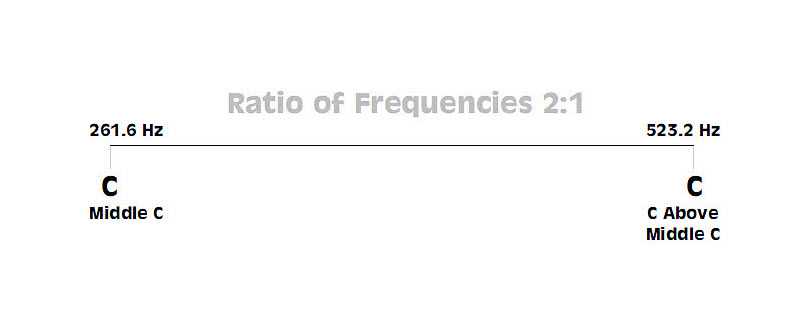
FIGURE 5: Ratio fo 2:1—Scale of “Middle C” and “C Above Middle C
3 Notes: The Second-simplest in the Music Theory of Scales
- Next, add a tone derived from the next simplest ratio of frequencies, 3:2. (The simplest possible frequency ratio that can identify a relationship between two tones is 2:1.) For reasons that will become clear in a little while, you can label the 3:2 tone G.
- Notice that when you add G to the scale, the relationship between G and the C above Middle C also happens to be a simple ratio of frequencies, 4:3.
- Now you’ve got a scale of three notes. It sounds good, too. The organizing principle looks promising (Figure 6).
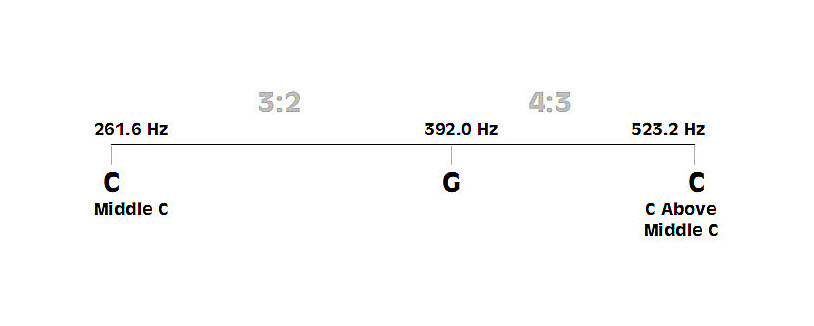
FIGURE 6: C - G - C, a Scale of 3 Notes
- Notice the big gap between Middle C and G. Fortunately, a tone derived from the simple frequency ratio 5:4 fits beautifully, right between Middle C and G. Call it E.
4 Notes: A Scale Corresponding to "Say Can You See"
- When you add E to the scale, the relationship between E and G turns out to be a simple ratio of frequencies, namely, 6:5. Amazing.
- The scale grows to 4 notes (Figure 7 below). Sounds great, too. These four notes correspond to the words “say, can you see,” in the American national anthem, music composed by John Stafford Smith, a London, England, church organist.
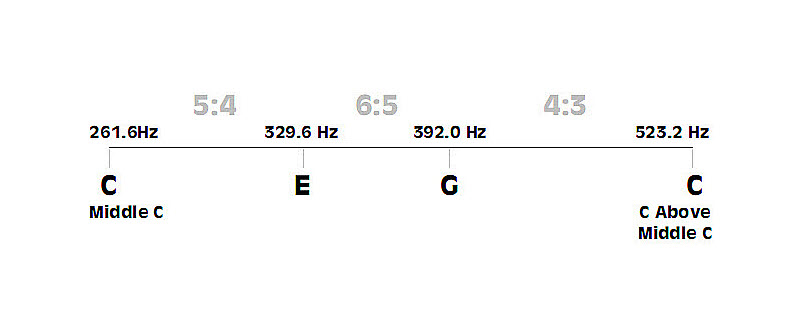
FIGURE 7: C - E - G - C Scale, Corresponding to "say, can you see"
A-440: Concert A Embedded In a Scale of 5 Notes
- Next, have a look at the big gap between G and C above Middle C. It so happens that yet another tone derived from a simple frequency ratio, 5:3, fits right in there. This tone happens to be the lovely and talented A-440 (Concert A). More about lovely, talented A-440 later on.
- The scale grows to 5 notes (Figure 8):
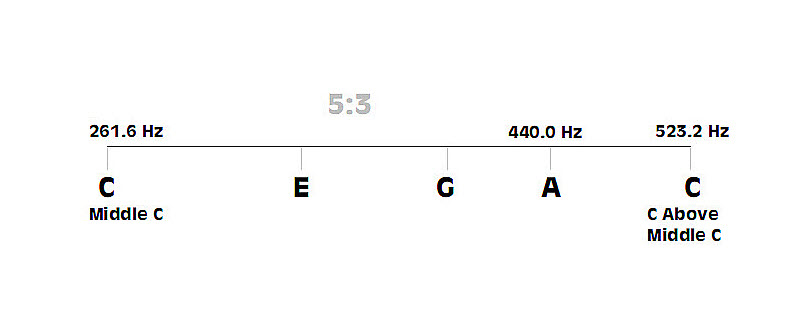
FIGURE 8: C - E - G - A - C, a Scale that Includes A-440, or Concert A
The "So Far, So Good" Scale of 6 Notes)
- You can fill in another big gap, the one between E and G, using another note derived from the simple frequency ratio, 4:3. The note F relates to Middle C by the this simple ratio.
- When you insert F into the scale, it relates to Concert A by the simple ratio of frequencies, 5:4.
- Now the scale has grown to six notes. So far, so good (Figure 9).
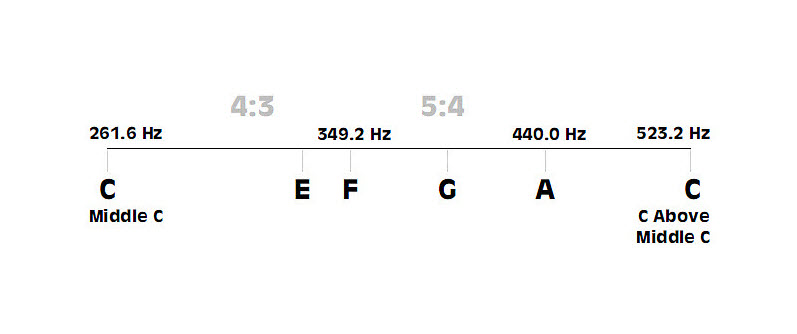
FIGURE 9: C - E - F - G - A - C Scale
Scale Theory: Using Simple Frequency Ratios to Build a Brain-friendly Scale
- Only a couple of big gaps remain in our quest to use simle frequency ratios to build a brain-friendly scale: one between Middle C and E, and another between Concert A and C above Middle C. The simplest frequency ratio available to fit between C and E is 9:8, which yields the note D.
- You can use the same 9:8 frequency ratio to stick a tone between Concert A and C above Middle C. Call it B.
- When you insert these two notes (D and B), you notice a few things:
- The scale has no more big gaps between notes;
- The smallest gap between notes has a ratio of frequencies of 16:15—not exactly simple;
- The order of the letter-names of the notes makes some sense, though not plain, common horse sense. The alphabet starts at C, stops at G, then starts again at A.
The C Major Scale: Music Scale Notes and Where They Actually Come From
- Now you’ve got an 8-note scale, the C major scale. It includes the 8th note. Which is the same as the first note, but higher in pitch (Figure 10):
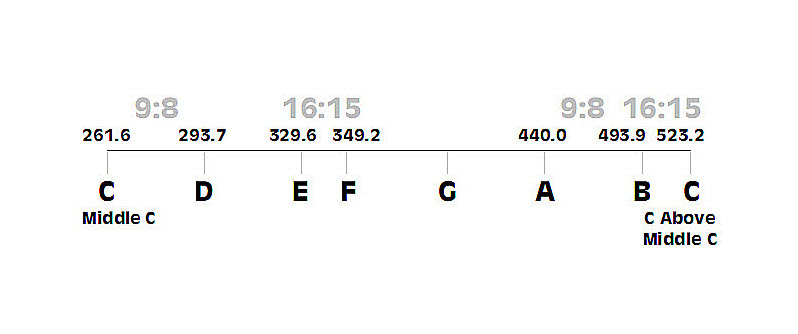
FIGURE 10: C - D - E - F - G - A - B - C, the C Major Scale
This scale definitely sounds brain-friendly. Looks like the organizing principle of tones derived from simple frequency ratios has worked. (Whew!)
4.1.6
That Familiar "Do-Re-Mi" Scale, and the "Do-Re-Mi" Song
If you’re European, you’ll recognize the scale in Figure 10 as the “do-re-mi” scale, using the solmization system, which designates notes using syllables instead of letter names:
Or, if you’re going down the scale:
Or, as the von Trapp family sang in The Sound of Music:
(They could sing better than they could spell.)
What Is an Interval in Music? The Scale of C Major on the Piano Shows You
In music, the pitch gap between any two notes is called an interval. Think of an interval as a relationship between two pitches. You can play the two pitches successively (a melodic interval)—usually the lower one first—or simultaneously (a harmonic interval).
So, that makes the pitch relationship between the first note and the eighth note an interval of an octave.
You get the same scale when you play the white notes on the piano starting at C. Any old C. You don’t have to start with Middle C on the piano (Figure 11):

FIGURE 11 The “Do-Re-Mi” Scale—Play the White Kyes On the Piano Starting with C
Since the scale has eight notes (including the first and last notes), the pitch gap between the first note and the eighth note is called an octave.
MELODIC INTERVALS AND HARMONIC INTERVALS—WHAT'S THE DIFFERENCE?
Another Potential Point of Confusion: Most of the time, the term "interval" is short for "melodic interval," which, as you now know, is the pitch distance between two different successive melodic notes. However, the term “interval” also has two additional meanings, both relating to harmony. A harmonic interval can refer to two different single notes sounded together to create two-note harmony. Or harmonic interval can refer to two different successive chords (the harmonic equivalent of a melodic interval), usually called a chord progression, as you’ll find out in Chapter 6.
By the time you finish Chapter 6, if you don’t understand these distinctions, you could get lost. Which might not cause you too much trouble if you happen to meet up with Ex-Marshal McDillon, who’s still out there, wandering around in the wilderness in his tar and feathers. He’s got excellent survival skills, though, even without his horse, and, as a musical saw player, he can tell you pretty much everything you need to know about the distinction between melodic and harmonic intervals. But you have to find him, first.
Scale Notes: The Octave In Music and Perceived Spacing Between Notes
That last note of the scale sounds exactly like the first note, and yet ... well ... “higher” in pitch. The same, but somehow different. The terminology, familiar to everybody who plays music, goes like this: the last note of the scale is an “octave higher” than the first note.
As you can see in Figure 11 above, the eight notes of the do-re-mi scale are not evenly spaced. Still, when you play this scale, it sounds agreeable whether you play it from bottom to top or top to bottom. It sounds as though the notes are proceeding smoothly up and down the pitch “staircase.” As though all the notes are the same distance apart. Even though they obviously are not.
How come? What if all the pitches were actually the same distance apart?
4.1.7
Evenly Spaced: An Equal Interval Scale that Sounds Terrible
So far, you’ve tried two different organizing principles to construct an agreeable-sounding scale
- A scale of random notes—the experiment with the chalk marks on the cello fingerboard. Result? A brain-averse scale. Chaotic and completely “unmusical.”
- A scale of notes related to each other by simple ratios of frequencies. Result? A brain-friendly scale. Clearly “musical,” beautiful- sounding. A scale consisting of a distinctive but uneven order of tones.
Now, just for good measure, try a third organizing principle: a completely regular, evenly-spaced order of tones.
Start at Middle C and divide the octave into seven equal intervals, for a total of eight notes (Figure 12 below). The lowest note is Middle C and the highest note is C above Middle C. All eight notes are spaced the same distance apart, frequencywise (37.4 Hz between each note).
No point in naming notes 2 through 7 because this scale is only theoretical.
And a good thing, too. Because, like the random scale of chalk-and-cello fame, this scale also sucks. It sounds terrible. (Figure 12):
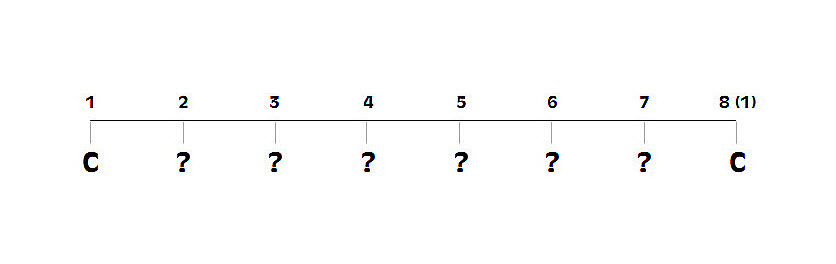
FIGURE 12 The “Eight-Note, Evenly Spaced, Seven-Equal-Interval” Scale
Middle C Frequency (261.6 Hz), and the Other Musical Notes, by Frequency, of the Scale
Table 10 below shows the frequencies for the eight notes of the equal-interval scale (Figure 12, previously), compared with the Middle-C-scale frequencies. As you can see, they’re all different, by roughly five to 24 Hz, except for the first and last “C” notes.
TABLE 10 “Eight-Note, Seven-Equal-Interval” vs Middle C Scale Note Frequencies
Note “Seven-Equal-Interval” Scale Note Frequencies (Hz) “Do-Re-Mi” Scale Note Frequencies (Hz)

4.1.8
Cutural Construction? No. Use Simple Ratios of Frequencies to Construct Scales
Substantial research findings show that, if you try to create music using the idea of "cultural construction," scales that have no tones in relationships of simple frequency ratios, your brain stops recognizing “musical” sound and hears chaos. Like the static you get when you move your analog radio dial between stations.
Infants respond to changes in pairs of tones only if the tones are related by small integer, simple frequency ratios—the tones that emerge from the harmonic series. Tones not related by simple frequency ratios simply do not elicit responses from babies. This strongly indicates that the human brain has a naturally-selected specialization for simple frequency ratios—that these preferences are not cultural constructs.
Not only that, infants remember scale tones when the intervals of the scale are of unequal size, compared with scales having intervals of equal size. This is consistent with the unequal-interval scales that emerge from the harmonic series. As you’ll see in Chapter 5, most scales used commonly worldwide have only five to seven different tones (i.e., not including the second octave note), which are unequally spaced.
Infants also have difficulty resolving tones that are close together. Tones spaced close together are not related by simple frequency ratios.
To summarize, your brain can make sense of, and prefers, scales of non-random but unequally-spaced tones—pitches related to each other in simple multiples or simple fractions of a fundamental frequency.
4.1.9
What Is a Chromatic Scale? A Scale of Equal Intervals
The chromatic scale by itself is a scale of equal intervals. It's just a pool of semitones or half-steps from which many smaller, truly musical scales can be built.
Look at all those (comparatively) wide intervals between some of the notes (Figure 13 below). Between C and D. Between D and E. Between F and G. Between G and A. Between A and B. Five intervals.
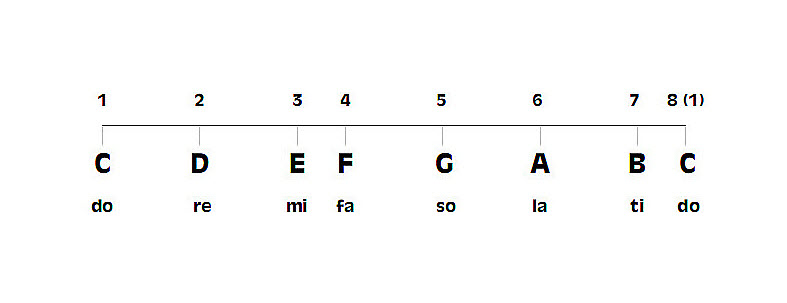
FIGURE 13 The “Do-Re-Mi” Scale Before Turning It Into an Equal-Interval Scale
Those five intervals look suspiciously like they’re exactly twice as wide as the two smaller intervals, the ones between E and F, and B and C. If the five bigger intervals are exactly twice as wide as the two smaller ones, and if you were to insert a tone into each of those wide gaps, you’d have:
- A 12-equal-interval scale (a total of 13 tones, including the first and last ones, which are the same note, an octave apart);
- A scale composed of close-together tones.
Precisely the recipe for non-musicality. So, would such a scale actually sound chaotic?
The Chromatic Scale: Using Flat and Sharp Notes to Fill In the Gaps
The chromatic scale by itself sounds chaotic. Not at all musical.
However, that does not mean the chromatic scale has no musical value. As you’ll see shortly, the 12-equal-interval scale, the chromatic scale, serves a valuable purpose as a pool of tones you can dip into and use in the construction of many different, truly musical scales. You can also use the same 12-equal-interval scale as a pool you can dip into for colourful extra notes when writing a song.
(While most equal-interval scales are inherently chaotic and unmusical, a few are actually palatable. Chapter 5 discusses an example of a musical-sounding equal-interval scale—an exception to the rule.)
For now, go ahead and fill in the five wide gaps in the above scale (Figure 13) with five new notes.
But before you do that, you’ll need names for the new notes. Problem is, there’s no letter of the alphabet between C and D, or D and E, or F and G, etc. What to do?
- Suppose you start at C, you’re going up to D, and you want to stick a note in between. Since you’re going “up” in pitch, call the in-between note a sharp note (symbolized ♯).
- If you’re going “down” in pitch, from D down to C, call the same in-between note a flat note (symbolized ♭).
(This nomenclature will become a lot clearer shortly.)
So ... here’s what you get when you fill in the last five gaps of the “do-re-mi” scale (Figure 14):
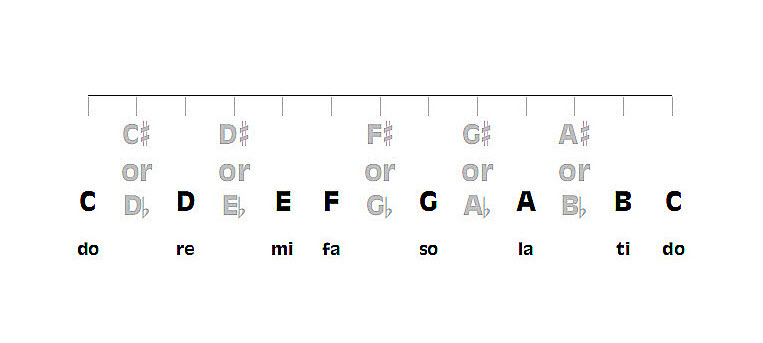
FIGURE 14: The “Do-Re-Mi” Scale with the Gaps Filled In with Flat and Sharp Notes
The Half-step: What Is a Semitone?
On the piano, if you start with the note Middle C (or any other C), you’ll notice that the in-between notes correspond to the black keys.
- The smallest interval in the above scale, the interval between any two adjacent notes, is called a semitone or half-step (for example, between C and C♯, or between E and F). So, an interval of an octave is comprised of 12 semitone intervals.
- The next smallest interval, the distance covered by two semitones, is called a tone, or a whole tone, or a step.
And the name of the above 13-note (12-semitone) scale is the chromatic scale. The five new notes added to the do-re-mi scale are called chromatic notes.
4.1.10
Solfege (or Solfeggio) and Guido of Arezzo
Solfege, also called solfeggio, refers to the syllables that are assigned to scale notes (do-re-mi, etc.).
To play the chromatic scale, just start at any C, then play every note...C, C♯, D, etc., all the way up to the next C. When you do this, you play 13 notes, but only 12 intervals of one semitone each. (Remember, an interval is not a note. It’s the pitch distance between two notes.)
ABOUT solfegE AND FRIAR GUIDO OF AREZZO
More than a thousand years ago, a nerdy Italian friar and music theorist named Guido (Guido d'Arezzo, ca. 995-1040), with more time on his hands than he knew what to do with, invented the basics of sofege (“do re-mi”). Guido also invented the basics of modern music notation.
Everyone’s familiar with “do re mi fa so la ti do”. However, if you haven’t studied music in Europe, you may not know about the additional syllables for the chromatic notes, syllables such as li, te, le, fi, and so on. (Yikes!)
Not only do the chromatic notes have their own syllables, but the syllables are different for the same note, depending on whether you’re ascending the scale, or descending it. Here they are (see next page):
SOLFEGE SYLLABLES AND ChROMATIC SOLFEGE
The grapic below shows the chromatic sofege syllables, ascending and descending.
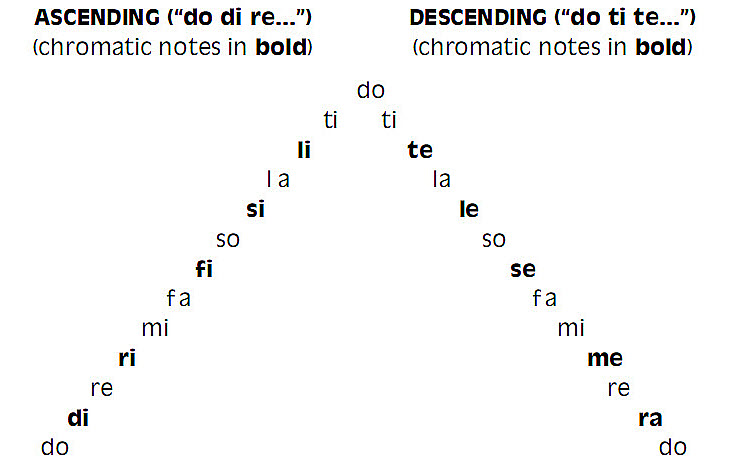
Do people actually study this stuff, this chromatic solfege?
Oh yes they do. They even claim it’s useful, and so it is, once you get into it. For instance, when you learn scales other than the standard do-re-mi scale (scales that include some chromatic notes), you can learn an equivalent do-re-mi syllable-based way of remembering each separate scale.
As you’ll see in later chapters, heavy metal musicians (among others) make use of scales called modes, and each mode can be translated into a do-re-mi type of scale using the above syllables.
The Diatonic Scale and the Meaning of "Diatonic"
So, the chromatic scale does sound chaotic—not naturally musical. However, you can grab notes from the chromatic scale to craft numerous naturally musical scales. These agreeable-sounding scales contain only eight or fewer notes, selected from the chromatic scale. Chapter 5 discusses some of them.
For now, though, a bit more about the “do-re-mi” scale.
Its common name is the major scale. It consists of eight notes, spaced by seven intervals of tones and semitones in this order:
tone, tone, semitone, tone, tone, tone, semitone
This type of scale is called a diatonic scale. “Dia” comes from the Greek word for “through” or “by.” And “tonic” refers to the tonal anchor of the scale—the first note of the scale—called the tonic note. So a “diatonic” scale’s notes are related to each other “through” or "by" the first, or “tonic” note of the scale.
More on this in Chapter 5, which discusses tonal music in detail.
4.2
Intervals
4.2.1
Pitch Distances and the Smallest Interval in Western Music
So far, three intervals have made an appearance. Here are their names and pitch distances:
- Octave: Pitch distance between the first note and the eighth note of the major scale (or first note and 13th note of the chromatic scale)
- Semitone: Pitch distance between any two adjacent notes of the chromatic scale
- Tone: Pitch distance of two semitones
Other intervals exist, and they all have names, but not interesting ones like Natasha or Engelbert. Since the semitone is the smallest interval in Western music, you can measure the other intervals in pitch distances that are multiples of semitones.
Even the tone and the semitone have their own special alternative “interval” names.
Music Interval Chart: All Intervals, Including Chromatic Intervals, with Names and Examples
Table 11 below, the Music Interval Chart, lists all of the intervals, including the chromatic intervals, within an octave. Usually (but not always), you reckon an interval—which is always two notes—as starting from the lower note and going to the upper note, as in the “Example” column in Table 11.
TABLE 11 Music Interval Chart
Interval Number of Semitones Example
- Minor Second
- Major Second
- Minor Third
- Major Third
- Perfect Fourth
- Augmented Fourth
- Perfect Fifth
- Minor Sixth
- Major Sixth
- Minor Seventh
- Major Seventh
- Octave
- 1
- 2
- 3
- 4
- 5
- 6
- 7
- 8
- 9
- 10
- 11
- 12
- C – C♯
- C – D
- C – E♭
- C – E
- C – F
- C – F♯
- C – G
- C – A♭
- C – A
- C – B♭
- C – B
- C – C

4.2.2
Major Scale Intervals and the Tonic Note
Figure 15 (below) clarifies the logic of interval names a bit:
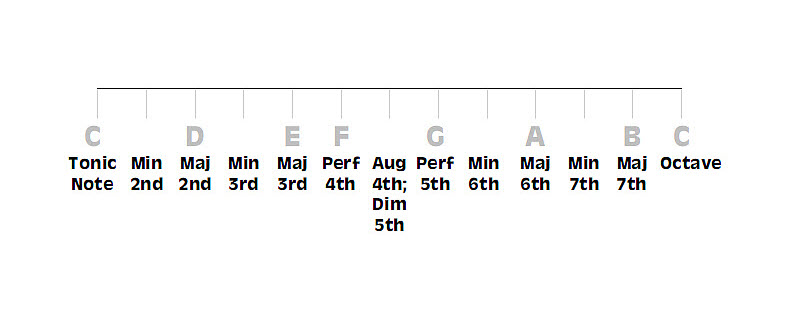
FIGURE 15: C Major Scale with Intervals Named
For reasons that will become clearer as you get better acquainted with intervals and scales and chords, all of the intervals are named with reference to the first note (the tonic note) of the major scale. For example, major second refers to the second note of the major scale, if you start from the tonic note.
The major scale has only eight notes. That’s why none of the intervals has a name higher than “seventh,” even though there are 12 different intervals.
(The intervals are not named after the notes of the chromatic scale because the chromatic scale by itself has no use as a “musical” scale.)
Major Second and Minor Second; Major Third and Minor Third
Here’s how each interval gets its name:
- Major Second and Minor Second: Both named for the second note of the major scale. The major second is an interval of a whole tone. The minor second is an interval of a semitone.
- Major Third and Minor Third: Both named for the third note of the major scale. The major third is an interval of four semitones. The minor third is a semitone less, at three semitones.
MINOR CONFUSION
Yet Another Potential Point of Confusion: The term “minor,” when referring to intervals (such as “minor third”), has a different meaning from the term “minor” when referring to keys, (such as “key of D minor”). Chapter 5 discusses keys.
If you confuse the meanings of “minor interval” and “minor key,” you’re apt to get lost.
If you were to get lost, Marshal Puma would probably conscript Deputy Fester and Doc Yada-Yadams to saddle up and fetch you back. Deputy Fester never learned to ride so good and nobody can figure out how he got to be a deputy. As for Doc, he’s three-fifths drunk, 80% of the time and can’t stay on his horse unless somebody does up his seat belt for him. Neither Fester nor Doc would be much good in a search party. So, if you steer clear of any confusion about minor intervals and the minor keys, you’ll stay found.
Perfect Fourth and Augmented Fourth
- Perfect Fourth: Named for the fourth note of the major scale. It’s an interval of five semitones. It’s called “perfect” because, compared with the augmented fourth, it sounds a lot more, um ... “perfect.” At least in the context of a chord or a tune.
- Augmented Fourth: A wild, unruly interval, it’s also named for the fourth note of the major scale. However, the augmented fourth overshoots the perfect fourth by a semitone, for a total of six semitones. This interval has several other names. It’s often called the tritone because it spans three whole tones (six semitones). It’s also known as the diminished fifth, because it’s a half-tone short of being a “perfect” fifth. In the Middle Ages, they called it diabolus in musica—the “devil in music.” Somebody had a sense of humour way back then. Or ... maybe they believed it was the musical devil hisself.
Perfect Fifth, Major Sixth, Minor Sixth, Major Seventh, Minor Seventh
- Perfect Fifth: Named for the fifth note of the major scale. It’s an interval of seven semitones. It’s called “perfect” because, compared with the diminished fifth, it sounds a lot more “perfect” in the context of a chord or a tune. (But, as you’ll see, “perfect” doesn’t necessarily mean “interesting.” Just like people.)
- Major Sixth and Minor Sixth: Named for the sixth note of the major scale. The major sixth is an interval of nine semitones. The minor sixth, one less at eight semitones.
- Major Seventh and Minor Seventh: Named for the seventh note of the major scale. The major seventh is an interval of eleven semitones. The minor seventh is one less, at ten semitones.
MINOR CHORD, MINOR KEY, MINOR INTERVAL: DON'T CONFUSE THEM!
Yet Another, Another Potential Point of Confusion: Here we go again. As you’ve learned, there’s a difference between minor intervals and minor keys.
Well, there’s also a difference between minor intervals and minor chords, such as, for example, the chord “D minor seventh,” which is neither an interval nor a key.
Chapter 6 discusses chords in harrowing detail. For now, just be aware that, if you confuse the meanings of
You don’t want to get lost right now, because Marshal Puma’s in no mood for organizing search parties. She just found out that Ex-Marshal McDillon and Doc and Deputy Fester have all been partying on Doc’s moonshine in a gully south of Dodge with a bunch of mid-west farmers’ daughters from the Beach Boys song, “California Girls,” who really make them feel alright. Looks like it’s all over between Marshal Puma and Ex-Marshal McDillon.
4.2.3
Pythagoras' Music: Pythagorean Scales
You may wonder who first figured out the relationship between lovely-sounding overtones, simple frequency ratios, and their application to scale building.
People usually credit the Greek philosopher, mathematician, and comedian, Monty Pythagor. As you know, Mr. Pythagor also formulated the Pythagorean Theorem about the square hide of the hippopotamus and the sum of the other square hides, which apparently revolutionized the footwear industry.
Mr. Pythagor (570 BC - 495 BC) may have figured out the mathematics of overtones and scales 2,500 years ago but he certainly was not the first to discover musically-pleasing scales. As discussed in Chapter 1, Neanderthals had bone flutes with diatonic scale notes tens of thousands of years ago.
As for Mr. Pythagor, it seems he realized that if you kept adding tones in consecutive frequency ratios of 3:2 (perfect fifths), you would get a pleasing-sounding musical scale. Next time you’re near a keyboard, try this:
Pythagorean Ratios and Pythagorean Intervals
Here's a little self-demonstration of Pythagorean Ratios and Pythagorean Intervals
- Play the note:
- Now play the perfect fifth (seven semitones) above, which is G:
- Next, play the perfect fifth (seven semitones) above G, which happens to be D, like this:
- Next, play the perfect fifth above D, which is A:
- Then the perfect fifth above A, which is E:
- Then the perfect fifth above E, which is B:
So far, you’ve played the following sequence of six notes:

The highest note, B, is almost three octaves above the C you started with.
3 to 2 Ratio: The Basis of Pythagorean Tuning
The next step is to play all six notes, all derived from the 3 to 2 ratio, in the same octave, and in scale order. Then add another C to complete the scale. Now you have the following seven-note scale:

There you go. With only the 3 to 2 ratio, the basis of Pythagorean tuing, that’s almost the diatonic major scale.
You can construct a good many of the world’s popular musical scales simply by using notes derived from consecutive frequency jumps in the ratio of 3:2, the ratio of the perfect fifth interval.
And, as discussed earlier, when you plunk a bunch of these notes into the same octave, you end up with other simple frequency ratios within the scale as well, such as 2:1 (octave), 4:3 (perfect fourth), 5:4 (major third), and so on.
So, since Mr. Pythagor figured out the principle of creating scales derived from simple frequency ratios, such scales are called Pythagorean scales. The “do-re-mi” major diatonic scale is a Pythagorean scale, even though it’s not perfectly based on consecutive intervals in ratios of 3:2.
“Not perfectly” means something goes awry. Here’s how:
So far, you’ve seen that if you use the strict Pythagorean method, you get these six different notes (the octave note is repeated):

Pythagorean Music Theory: Musical Ratios that Give Rise to Too-sharp Notes
Pythagorean music theory has almost given us the major diatonic scale. But one note’s missing, namely F.
So, continuing with Pythagorean music theory, why not try to get that last note by playing the next note, a fifth interval (seven semitones) up from B, which was the last note you played in the series?
Alas, it’s F♯, not plain old F.
Worse, the fifth above F♯ is C♯, not C.
Worse still, suppose you go away from the piano and instead decide to derive the series of notes using a calculator. You start with the frequency 261.6 (Middle C) and use your calculator to derive the series of fifth intervals as exact ratios of 3:2. Then you compare your list of calculated frequencies with the actual frequencies of the corresponding piano notes (available on Roedy Black’s Musical Instruments Poster).
What you discover is that all the theoretical notes you calculated are slightly but noticeably sharper than the notes on the piano!
In any case, the fact that you can almost get a complete major diatonic scale simply by using notes derived from consecutive overtone frequencies with the single simple frequency ratio 3:2 (the perfect fifth) illustrates the central role of simple frequency ratios in scale building.
4.2.4
Perfect 5th: Leaps In Music Eventually Reach the Same Note, But a Lot Higher In Pitch
Suppose you were to start with the frequency for Middle C and just keep on going, up and up in leaps of perfect fifth intervals, until you eventually reach the note C again, in a much higher octave.
The first question is, would you ever get to C again, somewhere over the rainbow, way up high?
Yes, indeed. Especially in Kansas.
It takes 12 leaps of perfect fifths to get to another C. You end up seven octaves above the C that you started with.
Perfect 5th Intervals: Consecutive Fifths
If you start from Middle C and use a calculator to multiply each successive frequency by a ratio of 3:2 (the simple frequency ratio of the perfect 5th interval), you get the data in Table 12. (It’s theoretical, because the last note is well above the upper limit of human hearing. Way over the rainbow.)
TABLE 12 Consecutive Perfect 5th Intervals Going Up Seven Octaves
- Middle C
- G
- D
- A
- E
- B
- F♯
- C♯
- G♯
- D♯
- A♯
- F
- C, seven octaves up from Middle C
- 261.6
- 392.4
- 588.6
- 882.9
- 1,324.4
- 1,986.5
- 2,979.8
- 4,469.7
- 6,704.5
- 10,056.8
- 15,085.2
- 22,627.8
- 33,941.6

Now, just for fun (are you having fun?), try getting to that same C, seven octaves above Middle C, except do your leaps in octaves, instead of perfect fifths.
The Pythagorean Comma: Octave Interval and 2:1 Ratio
Start with Middle C at 261.6 Hz and keep doubling the frequency to preserve the 2:1 simple frequency ratio that defines an octave interval. Table 13 shows what you get.
TABLE 13 Consecutive Octave Intervals, Going Up Seven Octaves

- Middle C
- C, one octave up
- C, two octaves up
- C, three octaves up
- C, four octaves up
- C, five octaves up
- C, six octaves up
- C, seven octaves up from Middle C
- 261.6
- 523.2
- 1,046.4
- 2,092.8
- 4,185.6
- 8,371.2
- 16,742.4
- 33,484.8
Have a look at the last frequency in Table 12 and compare it with the last frequency in Table 13.
They’re both supposed to be the note C, seven octaves above Middle C, right? So the two frequencies are supposed to be exactly the same, aren’t they?
The ratio between them, 33,941.6 Hz : 33,484.8 Hz, boils down to a ratio of 1.0136:1, instead of 1:1.
That ratio of 1.0136:1 is called the Pythagorean comma. (In music, a tiny interval is called a comma.)
The Pythagorean comma caused all sorts of havoc with instrument tuning for more than 2,000 years after Monty Pythagor died of laughter, without telling anybody how to fudge the Pythagorean comma and stay in tune.
(Chapter 5 discusses some clever jiggery-pokery, called equal temperament, that gets around the Pythagorean comma and cures all problems with scales forever. Well, sort of.)
4.2.5
The Harmonic Series: Pythagorean Scales and Pentatonic Scale Patterns
As discussed in Chapter 3, the human brain has the ability to automatically analyse a tone’s constituent harmonics and identify the soundmaker. That means the brain has the ability to understand (and appreciate) simple ratios of frequencies, whatever form they take—overtones of a single tone, or scales consisting of notes in simple-frequency relationships.
So, whenever humans stumble upon a way of generating a series of notes in simple-frequency relationships, such as the harmonic series, they find the notes pleasing and make music. Homo neanderthalensis knew how to do this, and they weren’t even of our species, Homo sapiens.
The harmonic series is a phenomenon of nature that anybody anywhere can generate with nothing more than a string or a piece of catgut or sinew attached via some sort of bridge to a resonator. Easy to make. Pleasing, You get simple-frequency-ratio discrete notes.
It’s no wonder, then, that Pythagorean scales, especially pentatonic scales (discussed in Chapter 5), have emerged independently in the musical cultures of all the major civilizations, from Africa to Europe to Asia. Humans everywhere prefer music made with tones in relationships of simple frequency ratios. Even a 22-tone scale used in India shows an underlying Pythagorean structure, no doubt derived from the harmonic series.
4.2.6
Consonance in Music, Dissonance in Music—What's the Difference?
Some intervals sound stable, balanced, at rest, when you play the two notes either together or successively. That’s called consonance.
Others sound unstable, unbalanced, restless. That’s dissonance (Table 14).
TABLE 14 Consonant and Dissonant Intervals
Interval Number of Semitones Example Consonant/Dissonant Minor Second 1 C – C♯ Dissonant Major Second 2 C – D Dissonant Minor Third 3 C – E♭ Consonant Major Third 4 C – E Consonant Perfect Fourth 5 C – F Consonant Augmented Fourth 6 C – F♯ Dissonant Perfect Fifth 7 C – G Consonant Minor Sixth 8 C – A♭ Consonant Major Sixth 9 C – A Consonant Minor Seventh 10 C – B♭ Dissonant Major Seventh 11 C – B Dissonant Octave 12 C – C Consonant

Consonance vs Dissonance: Why Is Music So Powerful?
Pick an interval, any interval. Play the two notes of the interval simultaneously on a guitar or keyboard, the way you would play a chord. Or successively, the way you would play a tune. Go through the list (previous page) yourself and try out all the intervals.
Consonance vs dissonance goes straight to the heart of what helps make music so powerful, so exciting and emotional (a good amount of dissonance), or predictable and dull (too much consonance). In music, “dissonant” does not mean “grating” or “harsh.” Rather, it refers to the sense you get of tonal unrest, the seeking of tonal resolution which imparts motion to melody and harmony.
Later on, you’ll find that chords, because they’re comprised of two or more intervals (three or more notes), also have consonant or dissonant characteristics, depending on the intervals within the chord.
The notes of a tune (melody) against the backdrop of a chord progression produce consonant or dissonant sounds, too.
FOG HORN SOUNDS AND AUCTION CHANTS: THE MAJOR THIRD INTERVAL (DOORBELL SOUND)
If you live near the sea, you may hear foghorns every so often. What’s that interval, the descending

It’s a descending major third. People just love that major third. It’s also the cheerful “ding-dong” of your doorbell.
And it’s the main interval the auctioneer uses as he or she disposes of the family farm. In 1956, Leroy Van Dyke and Buddy Black wrote a country classic called “The Auctioneer,” which highlights the auctioneer’s major third sing-song patter. Gordon Lightfoot recorded a fine version of this tune on his 1980 album Dream Street Rose.
The minor third, on the other hand, has a decidedly sad sound. It’s the chief interval in the children’s chant, “Ring Around the Rosie” (the interval on the word, “ros - ie”), also known as “Nyah-Nyah-Nyah-Nyah Nyaaaaah Nyah.”
The male chickadee uses a sliding descending minor third during mating season. The call goes from A down to F♯, or B♭ down to G. Women chickadees love that sad tune. The slide into the second note of the interval is characteristic of sad country songs. Male chickadees may have been the first true country singers.
4.2.7
Intervals In Music: Interval Examples
What causes intervals (and, by extension, chords) to sound consonant or dissonant?
Have a look at the ratios of frequencies that correspond to consonant vs dissonant intervals (Table 15).
TABLE 15 Frequency Ratios of the Intervals
Interval Semitones Example Freq. Ratio Consonant/Dissonant Unison 0 C – same C 1:1 Consonant Minor Second 1 C – C♯ 16 : 15 Dissonant Major Second 2 C – D 9 : 8 Dissonant Minor Third 3 C – E♭ 6 : 5 Consonant Major Third 4 C – E 5 : 4 Consonant Perfect Fourth 5 C – F 4 : 3 Consonant Augmented Fourth 6 C - F♯ 45 : 32 Dissonant Perfect Fifth 7 C – G 3 : 2 Consonant Minor Sixth 8 C – A♭ 8 : 5 Consonant Major Sixth 9 C – A 5 : 3 Consonant Minor Seventh 10 C – B♭ 9 : 5 Dissonant Major Seventh 11 C – B 15 : 8 Dissonant Octave 12 C – C1 2 : 1 Consonant

What Is Dissonance In Music?
Some intervals have simple frequency ratios, such as the major third (ratio of 5:4). Others have complex ratios, especially the augmented fourth (ratio of 45:32), the freakiest of them all.
In general, you get consonant intervals from the simplest frequency ratios, the ones with small numbers. You get dissonant intervals from complex frequency ratios, the ones with larger numbers.
Degree of perceived consonance vs dissonance in music is a function of pitch relationships among tones. Also, as discussed a bit later (Chapter 6), consonant intervals have overtones in common, or overlapping. Dissonant intervals tend not to.
Infants show clear preferences for consonant intervals, based on simple frequency ratios, such as fourths and fifths, and show a distinct aversion to dissonant intervals, such as the tritone. This indicates such preferences are wired in the brain at birth. It also underscores the futility of trying to build audiences for unpalatably dissonant music.
In an experiment comparing consonant-dissonant preferences of humans and cottontop tamarins, the monkeys showed no clear preference for consonant intervals over dissonant intervals. In the same experiment, humans showed a clear preference for consonant intervals, supporting the theory that music is a species-specific adaptation in humans only.
4.2.8
Intervals In a Major Scale: How to Identify Them
So far, the discussion of intervals has focussed on intervals in which the first of the two notes is the lowest note of the scale, the tonic.
Can an interval start on any note? How do you identify them?
Sure. For example, you can start on the note A, the sixth note of the C major scale. If you then go up three semitones to C, that’s an interval of a minor third. Any span of three consecutive semitones is a minor third interval, no matter where it occurs in a scale.
Consider, for example, the intervals within this scale (Figure 16):
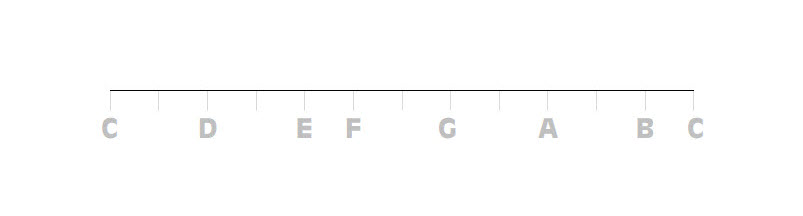
Interval Ratios: An Interval Chart Showing Ratios of All Intervals
Table 16 below shows intervals drawn exclusively from the C major scale—no chromatic notes.
TABLE 16 Interval Ratios Occurring Naturally in the Major Scale
Interval Semitones Example Freq. Ratio Consonant/Dissonant Minor Second 1 B – C 16 : 15 Dissonant Major Second 2 C – D 9 : 8 Dissonant Minor Third 3 A – C 6 : 5 Consonant Major Third 4 C – F 5 : 4 Consonant Perfect Fourth 5 C – F 4 : 3 Consonant Augmented Fourth 6 F – B 45 : 32 Dissonant Perfect Fifth 7 C – G 3 : 2 Consonant Minor Sixth 8 E – C 8 : 5 Consonant Major Sixth 9 C – A 5 : 3 Consonant Minor Seventh 10 D – C 9 : 5 Dissonant Major Seventh 11 C – B 15 : 8 Dissonant Octave 12 C – C 2 : 1 Consonant

Of the 12 different intervals, 11 anchor naturally to the tonal centre (the note C) at one end of the scale or the other.
And the only one that doesn’t? It’s that diabolical diabolus in musica, the very devil hisself, the augmented fourth. The one with the weirdest frequency ratio, 45:32.
The same interval can occur in several places in one scale. For example, in the C major scale...
- The minor second (one semitone) occurs in two places: E – F, and B – C.
- The perfect fifth (seven semitones) occurs in four places: C – G, D – A, E – B, and F – C.
4.2.9
Types of Intervals: The Complementary Intervals
Any two intervals that add up to an octave (which consists of 12 semitones) are called complementary intervals (Table 17).
TABLE 17 The Complementary Intervals

Minor 2nd (1 semitone) + Major 7th (11 semitones) = Octave Major 2nd (2 semitones) + Minor 7th (10 semitones) = Octave Minor 3rd (3 semitones) + Major 6th (9 semitones) = Octave Major 3rd (4 semitones) + Minor 6th (8 semitones) = Octave Perfect 4th (5 semitones) + Perfect 5th (7 semitones) = Octave
A few “rules” of complementary intervals:
- complement of any minor interval is a major interval. And vice-versa.
- The only two “perfect” intervals—perfect fourth and perfect fifth— complement each other (wouldn’t you know it).
- There’s no complement for the diabolical tritone (6 semitones).
Complementary intervals are important in understanding chord changes or chord progressions, the subject of Chapter 6.
4.2.10
What Is a Melody? And Why Does Chord Progression Harmony by Itself Sound Boring?
A melody is not a series of notes—it's a series of intervals, and it can stand on its own as a melody without chords. But a chord progression without a tune is just boring harmony.
A tone in isolation is just a tone. Only when two tones are sounded, either together or in sequence, does a relationship form. Your brain analyses that relationship. As each tone sounds in succession, your brain tries to anticipate the new tone that might come next in the context of the ones you’ve just heard.
If you play a progression of chords without a melody, does your brain interpret that chord progression as “music”?
Hardly ever, anyway. All you hear is formless harmony.
To hear music, you need a melody. Your brain demands it. You’ll see why in the discussion of harmony, chords, and chord progressions (Chapter 6).
On the other hand, if you play or sing a tune by itself, with no chords, does your brain interpret that tune as “music”?
Yes, it does. It hears a melody.
For example, most people sing national anthems without instrumental accompaniment. Great national anthems, such as those of France, Britain, America, Italy, Russia, and South Africa, have stood the test of time. These anthems have such powerful melodies that they sound beautiful with or without chords.
NATIONAL ANTHEM SINGING: THE WORD NATIONAL ANTHEM PERFORMANCES ARE IMPROVISATIONS
You’ve probably heard pop stars perform over-the-top versions of your national anthem. Usually, such renditions ruin the anthem.
When some singer with no compositional know-how deviates from the classic tune of a great national anthem in an effort to “make it his (or her) own,” he or she is attempting to re-compose the tune on the fly, incompetently improvising. It’s the musical equivalent of painting a moustache on the Mona Lisa.
That said, occasionally a genuine musical genius comes along and succeeds in rendering a national anthem in an awe-inspiring, yet original way. Jimi Hendrix did it at the Woodstock music festival in 1969. But that’s rare.
Consonant Intervals: "Star Spangled Banner" Melody Example
Most of the time, music consists of a tune with instrumental accompaniment. The tune seems to float or bounce along on top of the chords, which provide depth and color. With or without instrumental accompaniment, the tune or melody actually consists of a succession of intervals, not a succession of notes.
The first six notes of “The Star Spangled Banner”—“O-oh say can you see”—form five successive consonant intervals. Here they are (Table 18):
TABLE 18 First Five Consonant Intervals of “The Star Spangled Banner”

What Are Intervals? Intervals Come From Scales
An interval is the pitch distance between two notes. Intervals come from scales. Scales come from overtones. So intervals determine how chords sound, as well as how a tune (melody) sounds. Below is a flow diagram showing the pathway from tones to overtones to scales and intervals to tunes and chords.
Whether a tune is interesting or boring depends on its arrangement of intervals, not individual notes.
Not only that, but, as you’ll soon see, intervals determine how chords sound, and whether a chord progression imbues a piece of music with purpose and feeling ... or fails to.
Only when you get to intervals does the possibility of music even arise.
Here’s a little flow diagram that summarizes these relationships (Figure 17). The arrows mean “give rise to”:
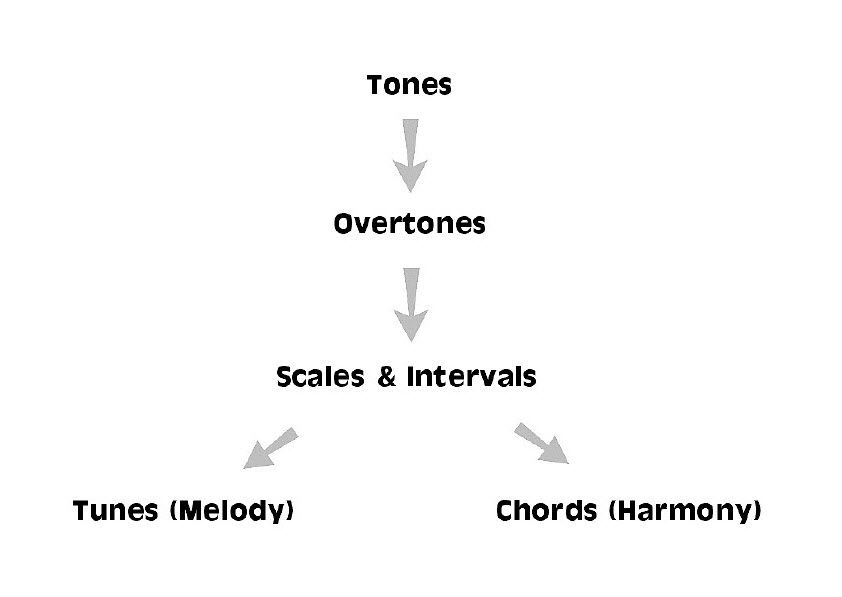
FIGURE 17: Pathway to Tunes and Chords
4.3
Interval Dynamics
4.3.1
Note to Note: Interval Relationships
Recall that an interval is a relationship between two pitches. Why the stress on “relationship”? Because that’s where the “music” in tunes and harmony comes from. Each note in a scale, and, ultimately, in a tune, sounds restful or restless, relaxed or tense, depending on the note’s position with respect to the other notes in the scale or tune. These note-to-note relationships, the urges and forces your brain perceives when it hears a tune, are called interval dynamics.
The activity that goes on in your brain to process these interval relationships is your musical experience.
In general, if music contains a large amount of unrest as the tune (melody) moves from interval to interval and chord to chord, you have an emotionally charged musical experience.
Intervals perform like the characters in a novel, sit-com, movie, or play. You get interested and emotionally involved in a dramatic story only when you perceive tension and unrest among the characters. Similarly when you perceive tension and unrest among the intervals as the tune and chords progress, you experience emotional involvement.
4.3.2
What Are Scale Degrees? Scale Degree Numbers
Figure 18 (below) shows all eight notes of the major scale, beginning and ending with C. However, there are other scales besides the scale of C major. So, to discuss interval dynamics in general, not just for the C major scale, it’s necessary to assign numbers to each of the tones of the scale.
When you number each note of the diatonic scale, the numbered notes are called scale degrees.
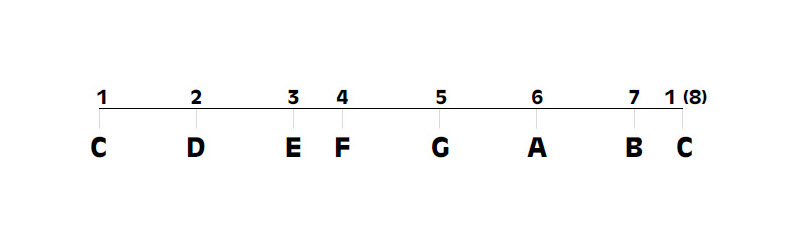
FIGURE 18: The Major Scale Showing Scale Degree Numbers
Scale Degree Names: A Scale Degree Chart with Names and Numbers
The first and last notes of the scale share the same number, so “(8)” is added to the last note in the following discussion of interval dynamics to distinguish first from last.
Each scale degree has its own name. Only some of these names are important enough to keep in mind, the ones in bold type (Table 19):
TABLE 19 Scale Degree Names and Numbers

4.3.3
Musical Scale: Here's What Music Looks Like
How does your mind interpret what you hear when you play a major scale? Call this scale what you like ...

... it’s the same scale. Figure 19 (below) gives you a better visual representation than Figure 18 (above). Here’s what it looks like to your brain—how your mind actually hears this musical scale:
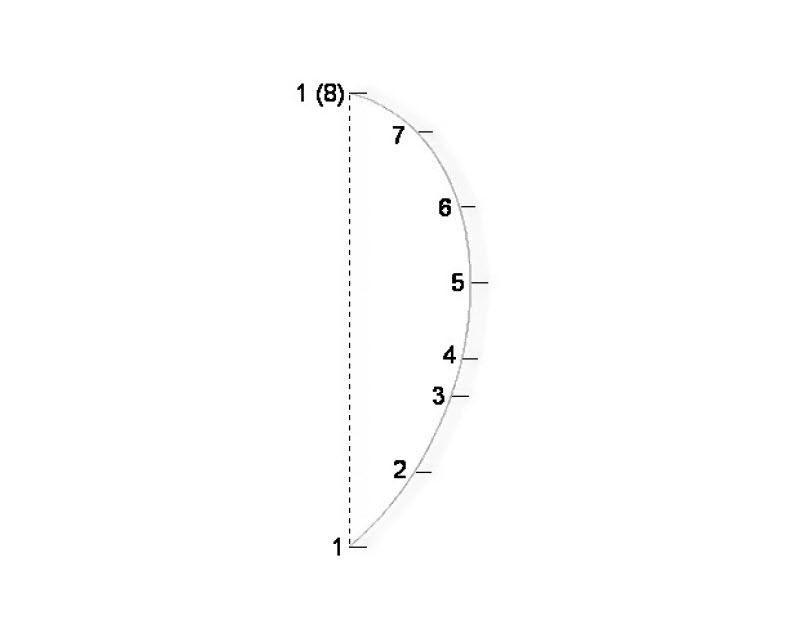
FIGURE 19: Musical Scale—What It Looks Like
Rising Tones, Falling Tones
Figure 19 (previous page) shows how you hear the tones rising higher and higher as you proceed upwards through the scale degrees, from 1 to 2 to 3 to 4, all the way up to 1 (8).
Or you hear falling tones as you proceed downwards from 1 (8) to 7 to 6 to 5, all the way down to 1.
As you proceed upwards through the scale degrees, each tone sounds like it’s not only rising in pitch, but also moving further away from the vertical line that runs through 1 and 1 (8).
Then, when you get to scale degree 5, something happens. The direction of motion reverses. And, although the tones continue to rise, the tones sound like they’re somehow returning home, towards 1 (8).
And yet, it’s a different version of home, a different version of the tonal centre.
Oddly, you get this “going away, then coming back” sensation whether you ascend the scale from one end to the other, or descend it from one end to the other.
4.3.4
Melody In Music: Tension and Release
The following discussion pertains to interval dynamics in tunes without chords. Tunes with harmony are discussed in Chapters 6 and 9.
When you play a single note, that’s all your brain perceives. Just a note. Not music, not melody (ignoring, for the time being, the tiny little matter of rhythm). But when you play at least two successive notes that are different from each other—an interval—suddenly you have at least the possibility of a melody.
In Figure 20 below, the arrows show the tensions, the unrest your brain perceives in the relationships between the tones (that is, the intervals), as you play the scale up or down.
The term interval dynamics refers to the fact that, once your brain understands which note is the tonic note, it perceives the succession of tones as energized, dynamic players that move in force fields—not as static, lifeless beads on a string. Without interval dynamics, there’d be no melody in music.
In Figure 20, the thicker the arrow, the greater the dynamic tension or unrest.
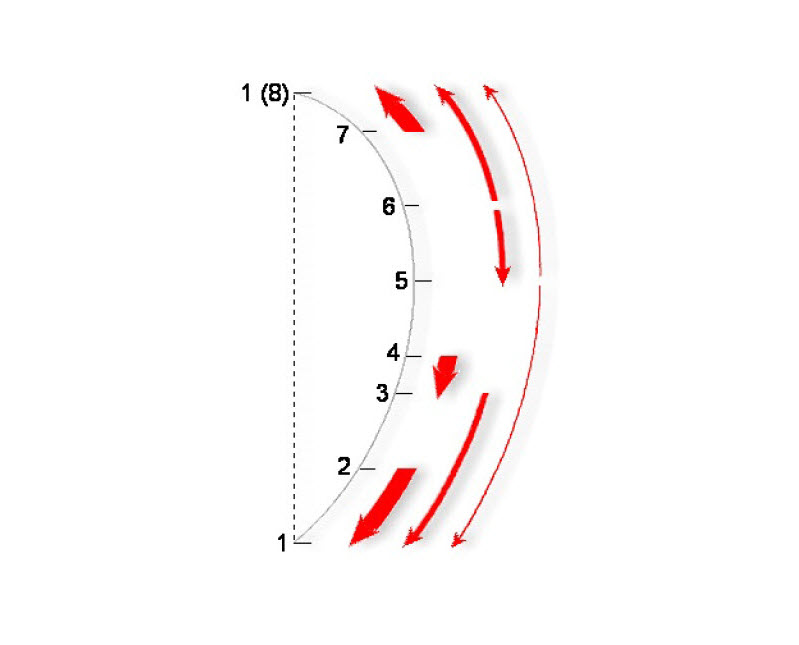
FIGURE 20: Interval Dynamics: How Your Brain Actually Hears the Major Scale
4.3.5
Tune Meaning: The Tune of a Song as Your Brain Hears It
Recall that simple ratios of frequencies gave rise to a scale in the first place. However, some frequency ratios within the scale are simpler than others. When your brain hears two frequency ratios, one simple, the other not-as-simple, it perceives an urging of the not-as-simple frequency ratio to become simpler. That’s the onset of a tune. That's when the tune starts to mean something.
As the tune moves from note to note, your brain perceives meaning in the tune only if most of the ratios of frequencies do not resolve to simpler ones, while holding the promise of ultimately resolving.
To get a tune started, you need a minimum of two frequency ratios so that your brain can tell which one is simpler than the other. This can happen only if you hear at least three successive notes:
- A single frequency ratio is a ratio of two different notes (one interval).
- Therefore two frequency ratios require at least three notes (two consecutive intervals).
Hero Myths: Narrative In Music
Every interval except the octave creates tension or unrest. This tension creates a musical story line or musical narrative, as musicologists call it, especially when referring to long-form instrumental works, such as symphony movements. Here’s how Anthony Storr describes the nature of musical adventuring:
Hero myths typically involve the protagonist leaving home, setting out on adventures, slaying a dragon or accomplishing other feats, winning a bride, and then returning home in triumph ... The end of the piece is usually indicated by a return ‘home’ to the tonic; most commonly to the major triad, less commonly to the minor. A hero myth is an archetypal pattern, deeply embedded in the psyche, because it reflects the experience of nearly all of us. We all have to ‘leave home’ by severing some of the ties which bind us to it ...
What Is a Narrative—A Musical Narrative?
Musical narratives apply to any musical form, including short songs. Here are three of many versions:
- “The Muso of Oz” story line. The protagonist leaves Kansas—the tonic note, the first note of the scale—on a mysterious journey. Immediately, tension arises (the curved arrows in Figure 20), and the tune finds itself on a yellow brick road trip, trying find its way back home. The narrativve continues. Will the tune find its way back home? Will it run into more tension and unrest before it finds its way home? Will it get hopelessly lost and have to rely on Marshal Puma to dispatch Doc and Fester, neither of whom can even stay upright on a horse? Usually, the tune does find its way back to tonic Kansas. End of tune.
Music Road Trip: Music That Tells a Story
- “The Escapee” music road trip. The protagonist moves through various dynamic tonal fields, hiding, disguising itself, trying to escape re-capture. Will the fugitive, Dr. Richard Cymbal, get caught somewhere along the road and hauled back to Tonal Headquarters to face the music? Will everything somehow resolve in a Hollywood ending of dramatic climax, car chases, explosions, truth, and justice? Yes, of course. End of story and tune.
- The “Lord of the Tunes” music road trip. The protagonist is the sovereign, the queen or king (could it be Elvis?), the holder of authority over the tune. The plot concerns itself with the loss and regaining of rightful authority. The sovereign’s source of authority, the Tonic Note, somehow passes into the possession of other notes. The story is still a road trip—a tune would not be a tune if it didn’t move continuously and, to a degree, restlessly. The identity of the holder of sovereignty gets called into question. Will the rightful sovereign get back sovereignty? Yes, usually. End of story and tune.
Every tune’s a music road trip. If the tune’s really short, the story’s over in seconds (for example, numerous nursery tunes). If the tune takes a lot of twists and turns, the story might go on for 20 minutes before the tune finally finds its way back home (a symphonic movement).
4.3.6
How Music Affects the Brain: Tune Recognition
Music (tune recognition) arises when your brain compares frequency ratios of a succession of notes, an order of intervals. For music to affect the brain, your brain needs context. If it’s a tune without chords, the first note you hear supplies the beginning of context. The second note provides more information. The third, still more information. And so on.
All the while, your brain is comparing frequency ratios. If it perceives several different simple frequency ratios (for example, 2:1, 3:2, 4:3, etc.) among the note relationships (i.e., the intervals), it figures out there’s an organizing principle at work that is giving rise to the succession of simple frequency ratios it’s perceiving.
What is this organizing principle?
It then expects to hear more notes from the same scale, but not necessarily in the same order.
In fact, your brain will get bored and lose interest in recognizing the tune unless it perceivessome surprises in the relationships between the pitches (the intervals) as the tune moves on.
As soon as the tune begins (sets the musical road trip in motion), your brain goes to work figuring out which note is the tonic—the tonal centre. All of the frequency ratios that define the other intervals depend on the tonal centre for context. The tonic note acts as a kind of gravitational force on the tune as a whole, which is why it’s called the tonal centre.
Your brain perceives a hierarchy of stability, with scale degree 1 (the tonic note) perceived as most stable.
CAT ON PIANO: THE VERY DEFINITION OF NON-COPYRIGHT MUSIC
As discussed in Chapter 1, chimpanzees create abstract paintings that sell for big bucks.
So, why couldn’t a talented cat compose music on the piano? If people buy chimp paintings, somebody might buy cat music.
Marshal Puma inherited a piano-playing cat after Ex-Marshal McDillon left town in a ball of feathers and humiliation. The cat, Tritone, walks along Marshal Puma’s piano keyboard.
Your brain hears a succession of random notes and can’t figure out which one is the tonal centre. Therefore, it can’t apply an organizing principle—a scale—to the notes it hears. So it can’t make sense of any of the intervals Tritone is playing.
Not only that, but Tritone, being a cat, has no ability to entrain. So he can’t even walk along the keys in a recognizably rhythmic style. Still, people do pay thousands of dollars for chimpanzee paintings. Who knows, Marshal Puma might want to record Tritone’s piano playing and send a demo to a record label in some other city, such as Wichita or even Austin. One that specializes in postmodern music.
Tonal Centre: Gravitational Force and the Tonic Note
Here’s another way of looking at the way the tones of the major scale gravitate towards the tonal centre (Figure 21):
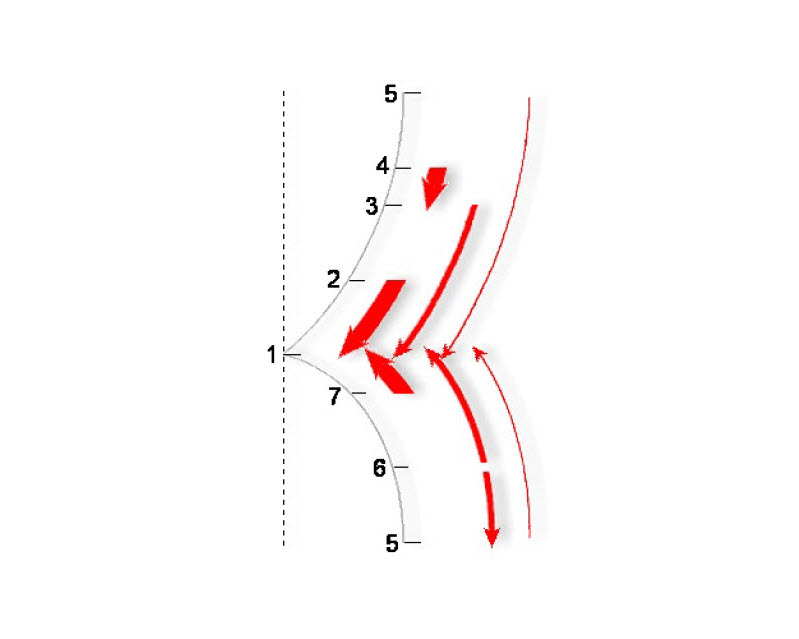
FIGURE 21: Interval Dynamics: “Gravitational Force” of the Tonic Note
Figure 21 illustrates the appropriateness of the term “diatonic.” All the notes of this type of scale ultimately relate to each other diatonically—“through” or “by” the “tonic” note, which functions as a gravitational force.
Major Scale: Note-to-Note Movement and State of Unrest
When you play a simple major scale, how does your brain automatically figure out and interpret what it’s hearing? Table 20 below shows the basics. You need context. Your brain needs to process all of the notes successively for you to feel these effects.
TABLE 20 Interval Dynamics, Major Scale
Note Movement
Interval Name


Fig. 20 Graphic
State of Unrest/Tension (with Respect to Tonic Note)
1 – 2 Major second (whole tone) Thick arrow Upper note of major second (frequency ratio of 9:8) seeks to resolve down to the tonal centre. Motion against the natural force, 1 – 2, creates high tension. Motion with the natural force, 2 – 1, resolves it. 4 – 3 Minor second (semitone) Thick arrow Upper note of minor second (frequency ratio of 16:15) seeks to resolve down to the closest note, scale degree 3, with its much simpler frequency ratio of 5:4 with respect to the tonal centre. Motion against the natural force, 3 – 4, creates high tension. Motion with the natural force, 4 – 3, resolves it. 7 – 1 (8) Minor second (semitone) Thick arrow Lower note of minor second (frequency ratio of 16:15) seeks to resolve up to the tonal centre. Motion against the natural force, 1 (8) – 7, creates high tension. Motion with the natural force, 7 – 1 (8), resolves it. 3 – 1 Major third Medium arrow Upper note of major third (frequency ratio of 5:4) seeks to resolve down to the closest tonal centre. Motion against the natural force, 1 – 3, creates moderate tension. Motion with the natural force, 3 – 1, resolves it. 6 – 5 or
6 – 1 (8) Minor second or Minor third Medium arrow Scale degree 6 has a roughly equal urge to resolve either down to the simpler frequency ratio of the nearby scale degree 5, or up to the closest tonal centre. Motion against the natural forces, 5 – 6 or 1 (8) – 6, creates moderate tension. Motion with the natural forces, 6 – 5 or 6 – 1 (8) resolves it. 5 – 1 or
5 – 1 (8) Perfect fifth or Perfect fourth Thick arrow Scale degree 5 has a only a slight but roughly equal urge to resolve to either tonal centre. Motion against the natural forces, 1 – 5 or 1 (8) – 5 creates slight tension. Motion with the natural forces, 5 – 1 or 5 – 1 (8) resolves it.
Dissonant vs Consonant: Melodic Motion
Your brain perceives all of the notes except the tonal centres, 1 and 1 (8), in some state of unrest as you play the scale. You can use any of several terms to characterize dissonant vs consonant interval dynamics.

The instant these forces come into play—the instant you hear a series of notes played or sung (a succession of intervals)—your brain may sense a tune (musical motion). It depends on the frequency ratios of the intervals and whether or not your brain can sense in those intervals an underlying organization.
Your brain automatically tries to determine if the intervals correspond to simple ratios of frequencies. It will also try to determine the tonal centre, the note that serves as the anchor for purposes of identifying the simple ratios. If it identifies several familiar simple frequency ratios, it instantly understands the organizing principle (a diatonic scale) and perceives some sort of tune—a succession of intervals manifesting a variety of levels of dynamic tension.
4.3.7
The Meaning of Tension: Character Actions and Interval Actions
Just as a writer of a movie script or play manipulates tension through the actions of characters, a composer or songwriter manipulates tension through the actions of intervals. Some intervals deliver more tonal tension than others.
Normally, a composer or songwriter comes up with a tune without intellectualizing about it. The tune just comes out as an effusion. However, like any good writer, a skilled songwriter or composer will then go over the tune and recognize weak spots—places where the tune drags (not enough high-tension intervals), or becomes confusing (too much material for short-term memory to handle), as it moves from note to note.
A knowledge of interval dynamics becomes vital in revising the tune. Historically, great composers (e. g., Beethoven) and songwriters (e. g., Leonard Cohen, Paul Simon), have sweated over revisions until they sense the tune has its own identity and doesn’t get tired-sounding, even after repeated listenings.
The Tonic In Music: Dynamic Tension
Any tune retains a distinct identity no matter where it’s played or sung in the spectrum of pitches. Therefore, any pitch whatsoever can serve as the tonal centre, the tonic note. It’s the frequency ratios that matter, not the specific frequency that serves as the foundation (tonic note) for determining the ratios, the dynamic tension.
The intervals with the simplest frequency ratios have the lowest dynamic tension, the greatest stability. The octave, with a frequency ratio of 2:1, is, of course, the most stable interval.
The perfect fifth, with its 3:2 frequency ratio, has little inherent tension, and therefore serves as a kind of counter terminus to the tonic notes at either end of the scale. The perfect fifth has so much natural stability that many tunes end on it (instead of the tonic, which is where most tunes end), and the listener does not feel as though the tune has failed to come to rest.
At the other extreme, the minor second can supply a lot of dynamic tension, especially in its role as scale degree 7 going up to 1 (8), the tonic. Because scale degree 7 strongly seeks to resolve up to the tonic, scale degree 7 is known as the leading tone.
It’s important to reiterate that your brain does not “learn” any of this. It’s hard-wired. You will always sense these states of rest or unrest, tension or resolution, etc., whenever you hear a variety of simple ratios of frequencies in succession.
4.3.8
Definition of an Octave (and the Meaning of Tyrannical!)
You don’t have to think of the octave (by definition, the irreducibly simple 2-to-1 frequency ratio) as tyrannical. But, like other natural phenomena (gravity, for instance), it is. As Figure 20 above illustrates, all arrows curve to the octave notes. In music, you can’t break free of the tyrannical octave.
No matter how hard your tune may try to break the chains of 1 and 1 (8), there’s just no escaping. Your tune merrily leaves home, lights out for the territory, and ends up ... where? Strangely, back home. Without having turned back. Without having gone in a circle.
The irreducible simplicity of the 2:1 (octave) frequency ratio induces a feeling of balance or repose. All other pitches arise from more complex frequency ratios such as 3:2, 4:3, 5:4, and so on.
2-to-1 Ratio: Interval of an Octave
Your brain distinguishes all other frequency ratios from the 2-to-1 ratio, the octave interval, in two ways:
- By associating a “different-from-octave” qualitative sound with each note representing each “non - 2-to-1" frequency ratio, within the context of the octave interval. For example, as you play the white keys on the piano from C up to the next C, you hear the notes D, E, F, G, A, and B all sounding qualitatively different from the C you started the scale with. But when you get to the C at the top of the scale, even though it’s a different note, it sounds qualitatively the same as the C you started with. Yes, it’s higher in pitch, but it still sounds to your brain like the identical note you started with, C.
- By associating a feeling of imbalance or unrest with each non-octave note. This feeling of unrest or tension increases in intensity as frequency ratios become more complex with respect to the octave interval.
How Many Notes In an Octave? And How Many Semitones?
An octave interval has 2 notes. You can stuff as many notes as you want between those 2 notes (for example the 12 semitones of the chromatic scale), but you still won’t escape the octave. You can never pry the octave open any wider, because you can’t reduce a frequency ratio to anything simpler than 2:1. It's called an OCTave because the term also can refer to the 7 notes of a diatonic scale, plue the octave, for a total of 8 notes.
Paradoxically, making peace with the smallest intervals of the octave, the semitones (through a bit of fudging called equal temperament), provides more than ample relief, if not escape, from the octave’s tyranny (coming up in Chapter 5).
(Tuning purists will note that some tuning systems slightly “stretch” the octave, such as one used by Indonesian Gamelan percussion orchestras. But such tunings are highly variable and, in any case, unheard of in Western popular music.)
4.4
Intervals: Emotional Power In Music
Table 21 below lists some reported emotional effects of various types of intervals, and specific intervals.
Keep in mind that the emotional power of intervals in music, like the emotional effects of other musical elements, varies with the musical context—the succession of preceding intervals, the prevailing chords and chord changes, rhythmic variables, instrumental tone colors, and so forth.
