How I Was Losing Dozens of Dollars Every Week Buying Tokens on DEX
Late 2024
The TON blockchain was thriving. New projects were launching almost daily, and any news — even the slightest tweet or Telegram post — could significantly impact token prices. It was a golden era for traders looking to speculate and catch quick pumps and dumps.
But there was one serious problem: buying tokens on various DEXes in the TON ecosystem was incredibly risky. Low liquidity, high slippage, and completely unpredictable execution. You could spot a promising token, jump in with $100, and watch over 90% of it vanish the moment you hit ‘Swap’ — all due to low liquidity and slippage.
Why does this happen?
Many decentralized exchanges on TON operate as automated market makers (AMMs). While this model is great for decentralization, it often suffers from fragmented liquidity. Add to that the lack of centralized price discovery, and you get pure volatility and losses out of nowhere.
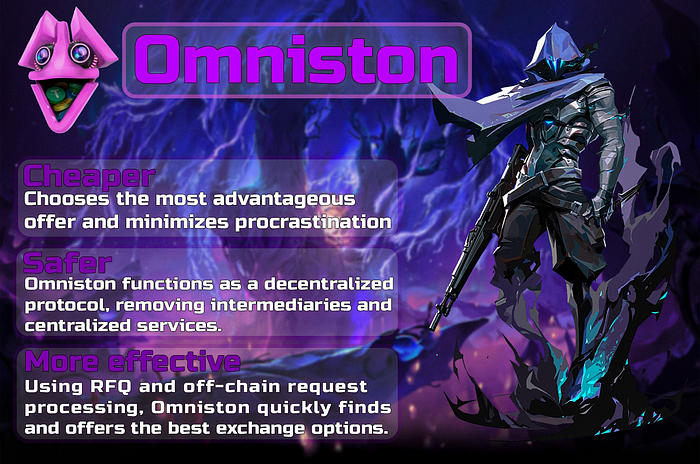
This is where liquidity aggregators come in to save the day. Recently, a new one emerged in the TON ecosystem — Omniston. The point of this aggregator is that it pools liquidity from various DEXes and DeFi protocols, allowing users not only to save time searching for the best platform to swap on but also to save money. The aggregator automatically finds the best rate and minimizes slippage.
Omniston isn’t limited to just the TON blockchain.
Active development is already underway to support cross-chain swaps, which will soon allow users to exchange tokens between different blockchains directly — quickly, securely, and without the need to manually switch networks. Very soon, the Tron network will be added, followed by the integration of other networks.

Omniston is already available for use when swapping on the STON.fi platform. To use it, all you need to do is enable it in the swap settings.
It’s currently operating in beta mode, which means there’s a 1,000$ limit per transaction. Nevertheless, this is more than enough for most users.
You can learn more about Omniston in the official article.
Or, if you’re more interested in the technical side, check it out here.