🇬🇧 Armenian-Turkish War (1920). The First Republic of Armenia
First Republic of Armenia
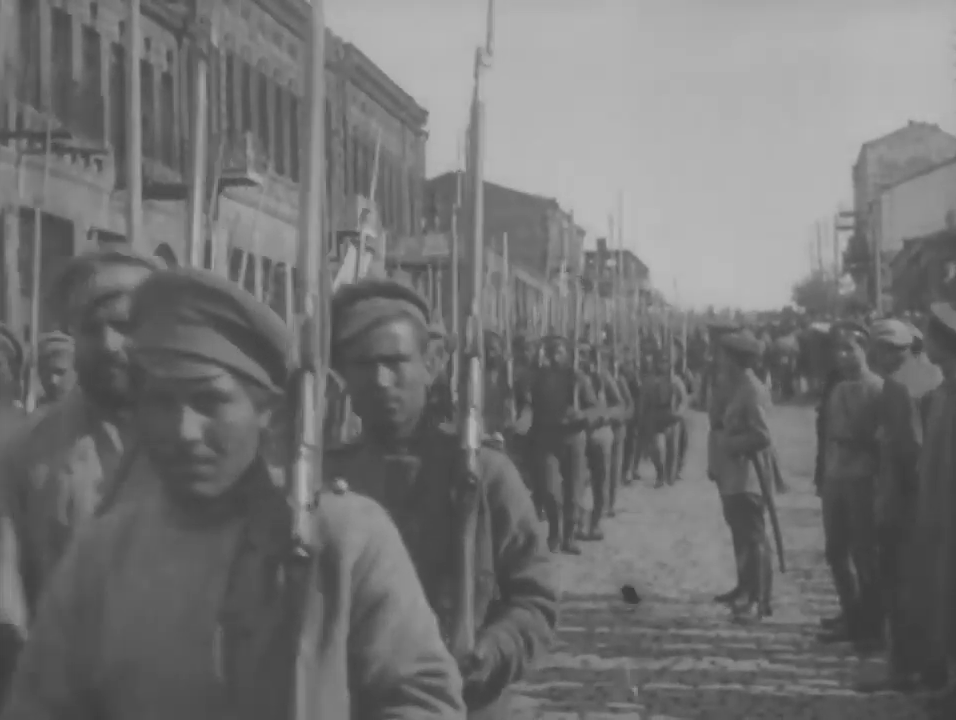
By the summer of 1920, the position of the Kemalist movement remained extremely difficult. Mustafa Kemal understood that without creating a regular army, financing it, supplying it with weapons, and providing professional training, Turkey would be unable to withstand the Greek advance and possible intervention by the Entente powers. At the same time, Ankara increasingly viewed Armenia as a potential obstacle to establishing a direct connection with Soviet Russia.
The Kemalist leadership increasingly turned toward cooperation with the Bolsheviks. Under conditions of postwar devastation and international isolation, external support was becoming vital for Ankara. Therefore, in the summer of 1920, a Turkish delegation headed by Bekir Sami arrived in Moscow. Negotiations were held with representatives of the RSFSR, including the People's Commissar for Foreign Affairs, Georgy Chicherin.
Soviet Support for Kemalist Turkey
The support provided by Soviet Russia to the Kemalist movement was extensive and multifaceted. Between 1920 and 1922, Turkey received:
- 39,000 rifles;
- 327 machine guns;
- 54 artillery pieces;
- 64 million rounds of ammunition;
- 147,000 artillery shells;
- Russian weapons left in the Caucasus after the withdrawal of the Russian army in 1918;
- two destroyers;
- equipment and raw materials for ammunition production;
- equipment for two gunpowder factories built on Turkish territory.
In addition to military supplies, Moscow provided hundreds of railway wagons of fuel, 600,000 tons of grain, and 10 million gold rubles.
Soviet military specialists also played an important role. Mikhail Frunze, Semyon Aralov, Budu Mdivani, and other representatives of the Soviet command were sent to Turkey. They participated in organizing the regular army, training soldiers, and planning military operations.
Thus, by the autumn of 1920, Ankara had received not only political support from Moscow but also the material resources necessary to continue the war.
Armenia as an Obstacle Between Ankara and Moscow
At the same time, disagreements existed within the Kemalist leadership over the question of war with Armenia.
In June, Mustafa Kemal cancelled an order to occupy Sarikamish and the Soganlug Pass. On August 1, Chief of the General Staff Ismet Bey sharply criticized Kazım Karabekir for taking independent action.
According to Ankara, Armenia, already involved in the war with Azerbaijan, did not represent an immediate threat. Ismet proposed leaving only one division in the east while transferring the main forces against the Greeks.
In a message to Karabekir, he wrote:
“Our enemies and their accursed friends are waiting for the division of our forces and rejoicing at every manifestation of disagreement… The gravity of the situation is unprecedented in our history, and we are driven by the instinct of national self-preservation.”
Karabekir, however, continued to advocate active operations in the east. In Ankara, the opinion gradually gained strength that Armenia had to be defeated before Soviet Russia could establish its own control there.
The appearance of a Red Army cavalry battalion in Nakhichevan in the summer of 1920 made a strong impression on the Turkish leadership. At the same time, Turkish and Azerbaijani representatives sought to convince Moscow that Armenia was an “outpost of the Entente.”
The Kemalists also faced another problem: if Soviet Russia established control over Armenia first, Turkey might lose the opportunity to recover territories beyond the 1914 border.
In early September, taking into account the Red Army's involvement in the war against Poland and Wrangel, Mustafa Kemal concluded that the moment was favorable for an offensive.
Armenia on the Eve of War
By this time, the Armenian army was in a difficult condition. The consequences of the May uprising, disagreements between regular officers and partisan commanders, constant border clashes, and widespread desertion had weakened its combat effectiveness.
Nevertheless, Armenian forces had achieved several successes during the summer. Units under Shahmazian and Shelkovnikov operated in Zangibasar, Vedi, and Sharur.
The Armenian government also relied on international support.
In August 1920, the Treaty of Sèvres created hopes that the great powers would ensure the implementation of its provisions concerning Armenia. The expected decision by U.S. President Woodrow Wilson on the question of the borders was particularly important.
The Armenian leadership sought to establish control over territories that it regarded as part of a future expanded Armenia. During the summer, the Armenian army occupied the Penyak area in the Ararat Governorate and a significant part of the Araks Valley.
On September 7, a small detachment led by the partisan commander Sasuntsi Manuk from Igdir began an advance toward the heights of the Surmalu district. By the evening of September 9, several settlements had been captured. Sasuntsi Manuk was mortally wounded during a counterattack, but his detachment continued advancing and by September 13 had established control over the southwestern part of the district.
Meanwhile, the Turkish army was preparing its offensive.
The Beginning of the War
Kazım Karabekir concentrated his forces on the Caucasus Front. In late August and early September, units of the 9th Caucasian Division exchanged artillery fire with Armenian forces between Olti and Sarikamish.
On September 2, Karabekir met the first Soviet delegation in Erzurum, headed by Yan Upmal-Angarsky, which had brought 200 kilograms of gold. Karabekir demanded the removal of the “Dashnak barrier” separating Turkey from Soviet Russia.
During the same period, Ismet Bey proposed that Mustafa Kemal and Karabekir coordinate a joint campaign with Azerbaijan against Armenia.
On September 13, the Turkish attack on Penyak began. Five battalions of the regular army, supported by local detachments, attacked the Armenian positions at night. The Armenians were caught by surprise and retreated.
On September 20, Mustafa Kemal officially authorized Karabekir to occupy the Kars region as far as Kagizman, Novo-Selim, and Merdinek. The destruction of the Armenian army was declared the main objective.
Karabekir prepared a force of more than 25,000 men.
On September 24, he informed his commanders:
“In order to put an end to the oppression of the Muslim population by the Dashnak Armenians, the Grand National Assembly has decided to take retaliatory measures, and the necessity of our operation has been agreed upon with the Russian government.”
The general offensive began at three o'clock in the morning on September 28.
The 9th Caucasian Division was to cut the Sarikamish–Kars road, while the 12th Division was to enter Sarikamish from the south. Armenian units began retreating.
On September 29, the Armenians evacuated Sarikamish. The following day, Turkish forces occupied the town and captured the abandoned supply depots.
On October 2, Armenian forces finally abandoned Novo-Selim.
Armenian Mobilization
The defeats produced an immediate reaction in Yerevan.
On September 30, the government declared martial law. Prime Minister Hamazasp Ohandjanian appealed to the population to abandon their daily affairs and go to the front:
“Everything and everyone to the front. Not a single deserter shall remain in Armenia. Not a single young man shall sit at home.”
The government called for mass mobilization:
“Citizens! To arms, to the front, to victory!”
The Armenian Revolutionary Federation joined the appeal. On October 1, representatives of various political forces — from the People's Party and Ramkavar to the Hunchakian and Social Democratic parties — united in an inter-party council.
A wave of patriotic demonstrations swept through Armenia and Georgia. Men abandoned their agricultural work and volunteered for the army. Many deserters returned to their units. Recruitment offices struggled to cope with the influx of volunteers.
Large numbers of women also volunteered for medical service.
Members of the government traveled to the front to raise morale. Simon Vratsian and Artashes Babalian went to Kars, Abraham Gulkhandanian to Kazakh-Ijevan, Sarkis Araratian to Surmalu, and Arshak Jamalian and Gevorg Ghazarian to Alexandropol.
However, the wave of volunteer enthusiasm could not quickly eliminate the structural problems within the Armenian army.
Hopes for Western Assistance
The Armenian government once again appealed to the Entente powers.
On October 6, thousands of people gathered in Tiflis outside the Armenian mission. Young Armenians volunteered and demanded assistance from the Allies.
French representative Corbeil urged Paris to accelerate arms deliveries and considered the possibility of an Allied landing at Trebizond.
British High Commissioner Colonel Stokes also recommended assistance to Armenia. During a visit to the Kars Front, he was impressed by the Armenian army's morale and reported to London that Armenian political parties and the population were united against the Turks and Bolsheviks.
However, the attitude in London was much more cautious.
The British Foreign Office questioned the scale of the Turkish offensive and did not want to make serious commitments. Curzon even rejected a symbolic protest to Moscow, remarking:
“I see no use in it.”
American High Commissioner Mark Bristol was likewise skeptical of reports from the Armenian government. He believed that Armenian dispatches might be truthful, but that they nevertheless created an exaggerated impression of the situation.
The final Armenian diplomatic efforts — including appeals by General Bagratuni and Avetis Aharonian — failed to secure substantial military assistance.
The Attempt to Reach an Agreement with Moscow
Recognizing the limitations of Western assistance, the Ohandjanian government attempted to resume negotiations with Soviet Russia.
On September 19, the Armenian government officially invited Boris Legran to Yerevan. The Soviet side, however, delayed his departure.
Moscow regarded Armenia as an “outpost of the Entente” and doubted the possibility of long-term cooperation with the Dashnak government.
Chicherin effectively no longer considered a treaty with Armenia urgent. Zangezur and Nakhichevan were not to be unconditionally transferred to Yerevan, and the question of their status remained open.
The Soviet leadership also believed that the Armenian government would not voluntarily guarantee the transit of military supplies to Anatolia.
Nevertheless, Boris Legran remained hopeful about reaching a compromise.
He proposed demanding that Yerevan abandon the use of force to occupy the territories claimed under the Treaty of Sèvres, accept Soviet mediation in determining the border with Turkey, and guarantee the transit of Soviet military supplies.
In return, Moscow could demand that Turkey halt its offensive.
Legran also opposed the immediate Sovietization of Armenia, fearing that the Armenian population would perceive the Red Army as an ally of the Turkish forces.
Only on the night of October 9–10 did the Soviet mission depart for Yerevan.
Legran was ceremonially received in the Armenian capital on October 11. On October 28, the two sides initialed a draft Soviet-Armenian treaty.
The document recognized Armenia's independence, provided for its rights to Nakhichevan and Zangezur, and contained broad guarantees.
However, the draft never entered into force. By early November, amid the renewed Turkish offensive and Moscow's changing policy, it was rejected.
The Battle for Kars
While diplomats attempted to find a way out of the crisis, the military situation continued to deteriorate.
On October 12, Bishop Garegin Hovsepyan blessed the Armenian troops in the Church of the Holy Apostles. The Armenian plan called for an attack on the Turkish positions before dawn on October 14.
However, some units were late reaching their positions. As a result, Armenian troops encountered the prepared defenses of the 9th Turkish Division.
Two companies of the 5th Regiment panicked and retreated. By nightfall, Armenian forces had withdrawn. Their losses amounted to approximately 600 men.
On October 20, Ismet Bey informed Karabekir that the moment had come for a final assault on Kars.
On October 23, Mustafa Kemal declared that Turkey did not seek aggression against the Armenians and placed responsibility for the war on the Armenian leadership and its allies.
On October 27, Karabekir launched a new offensive.
Fighting broke out in the Surmalu region and on the approaches to Kars. Despite resistance from Armenian units, the Turkish ring around the fortress gradually tightened.
The Fall of Kars
Karabekir scheduled the assault on Kars for October 30.
In the morning, communications between General Pirumian's headquarters and the rear were cut. The Turkish 17th Regiment suddenly captured Lazarev Fort.
At 10:30 a.m., the Turkish 34th Regiment entered the city with virtually no resistance.
Chaos broke out. Some soldiers threw off their uniforms and attempted to hide. At noon, the Kars citadel fell.
Generals Pirumian, Ghazarian, and Araratian were taken prisoner, along with Minister Artashes Babalian.
Mustafa Kemal congratulated Karabekir:
“The capture of such a fortress as Kars is a matter of great pride and honor for soldiers of any nationality.”
On November 2, Karabekir addressed the Armenian population, blaming the Dashnaktsutyun for the catastrophe and for hostility between the two peoples.
After the fall of Kars, the Armenian army retreated toward Alexandropol. On November 7, Turkish troops occupied the city.
The Final Stage of the War
On November 8, Karabekir delivered Mustafa Kemal's ultimatum to the Armenian government.
Armenia was required to hand over to the Turkish command:
- 2,000 rapid-fire rifles;
- 20 heavy and 40 light machine guns;
- three batteries of heavy artillery;
- 4,000 boxes of rifle ammunition;
- 6,000 artillery shells;
- one locomotive;
- 50 railway cars.
The Armenian army was also required to withdraw behind the Surmalu–Nalband–Vorontsovka line.
The Armenian government attempted to secure peace.
On November 10, Ohandjanian stated:
“My government assures you that it is fully prepared, together with the government of the Grand National Assembly of Turkey, to conclude a lasting peace corresponding to the vital needs of both states.”
The Turkish offensive, however, continued.
On November 11, Ohandjanian addressed parliament:
“Either we must fight, or be ruthlessly exterminated by the Turks. The government, having exhausted all peaceful means, is compelled once again to rely on arms.”
Meanwhile, Turkish forces continued their advance. Armenian troops abandoned Igdir, Surmalu, and Shahktakht and withdrew across the Araks.
On November 15, the Armenian government decided to capitulate.
On November 17, Karabekir ordered a ceasefire.
On November 18, Sarkis Araratian signed the armistice at Alexandropol.
Consequences
By the end of November 1920, Armenia found itself in a completely different geopolitical situation from that of the summer.
The Treaty of Sèvres, which only a few months earlier had been regarded by the Armenian leadership as the foundation of a future territorial settlement, had effectively become impossible to implement without military support from the great powers.
Western governments expressed sympathy for Armenia, but did not provide the military assistance that could have changed the course of the war.
Soviet Russia, by contrast, supported the Kemalist movement with weapons, gold, food, and military specialists. At the same time, Moscow sought to establish its own influence in the Caucasus and regarded relations with Ankara as an important element of its regional policy.
For Turkey, the war ended in military victory and strengthened the Kemalist government's position ahead of further negotiations with the Entente and Soviet Russia.
For Armenia, the defeat meant the loss of Kars, Surmalu, and other territories, a severe military and political setback, and the collapse of hopes for implementing the territorial provisions of the Treaty of Sèvres.
On November 20, Haraj, the newspaper of the Bureau of the Armenian Revolutionary Federation, wrote:
“Let Armenia be small, very small, but let it be independent.”
By that point, however, independent Armenia was already facing the necessity of finding an entirely new political path.
The Turkish-Armenian War of 1920 was not merely a military confrontation between two states. It was part of a broader struggle over the Caucasus, in which the interests of Kemalist Turkey, Soviet Russia, Azerbaijan, Georgia, and the Entente powers intersected. Armenia's fate in these circumstances depended not only on the situation at the front, but also on which external powers were prepared to support it politically and militarily.