🇬🇧 Occupation of Armenia by the Bolsheviks. The First Republic of Armenia
First Republic of Armenia
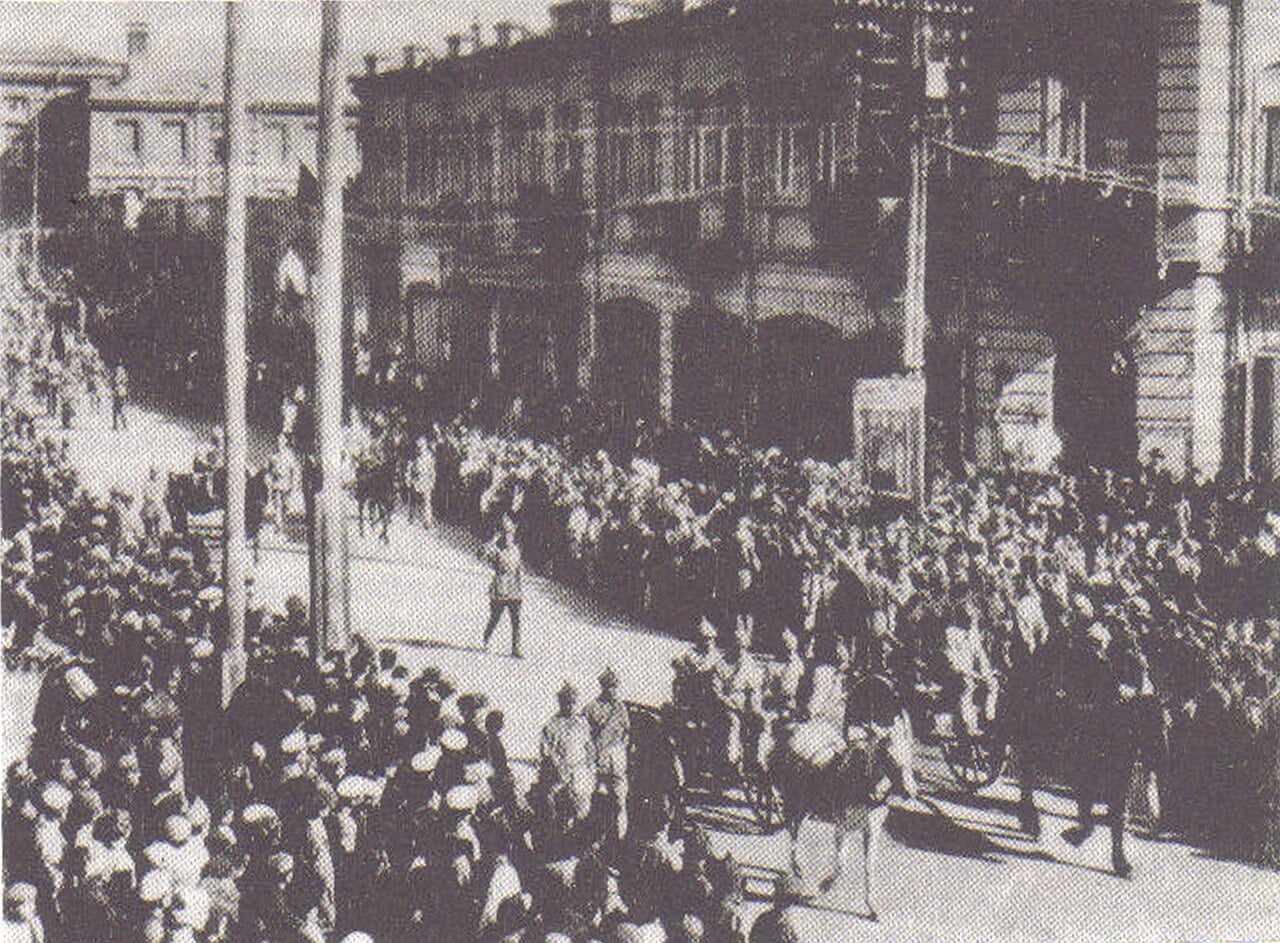
By November 1920, the situation of the First Republic of Armenia had become critical. The country was simultaneously facing an advance by Turkish forces, a severe internal crisis, and the advance of the Red Army from Azerbaijan. Meanwhile, various options for future policy toward Armenia were being discussed in Moscow.
Preparations for Sovietization
On November 6, 1920, RSFSR People's Commissar for Foreign Affairs Georgy Chicherin sent a message to the Caucasian Bureau stating that Armenia had to be saved—either through mediation or through Sovietization. He demanded swift action so that the Entente powers would not be able to thwart these plans.
However, conflicting directives were coming from Moscow and did not always correspond to the rapidly changing situation in the South Caucasus. Grigory Ordzhonikidze insisted on the occupation of Armenia by the Red Army. In his view, this was necessary to prevent Turkish forces from advancing toward Azerbaijan, where rumors were spreading of a possible large-scale anti-Soviet uprising.
On November 22, Ordzhonikidze reported to the Central Committee of the Russian Communist Party (Bolsheviks) that the joint leadership of the Azerbaijani and Armenian Communist parties had concluded that decisive action was necessary. On November 24, he reported that Armenian Communists and Nariman Narimanov, chairman of the Azrevkom, insisted that there could be no further delay, since the Turks were seeking to free their hands in Armenia, while the Dashnaktsutyun, in their assessment, had lost control and influence. Ordzhonikidze viewed the Sovietization of Armenia as a guarantee against further Turkish plans concerning Azerbaijan.
On November 22, with the approval of the Caucasian Bureau, the Military-Revolutionary Committee of Armenia—the Revkom—was established in Baku. Sarkis Kasyan became its chairman, while its members included Askanaz Mravyan, Sahak Ter-Gabrielyan, Alexander Bekzadyan, Isaac Dovlatyan, and Avis Nurijanyan.
Three days later, Kasyan and Nurijanyan left for Kazakh. They were carrying food, fuel, automobiles, revolutionary literature, paper, a printing press, and other necessary supplies. The proclamation announcing the Sovietization of Armenia had already been prepared and typeset, but because of the shaking during the journey, it had to be redone in Kazakh.
The Last Government of the First Republic
Meanwhile, the situation of the Armenian government was rapidly deteriorating.
On November 23, the government of Prime Minister Hovhannes Kachaznuni resigned. It was replaced by Simon Vratsyan, who became prime minister of the last cabinet of the First Republic of Armenia.
Vratsyan's government included:
- military affairs — Drastamat Kanayan;
- finance — Hambardzum Terteryan;
- agriculture and state property — Arshak Hovhannisyan;
- legal affairs — Arsham Khondkaryan;
- education and culture — Vahan Minakhoryan.
The new government faced an extremely difficult choice. Turkish forces already controlled a significant part of the country, the army was exhausted, and Soviet forces were approaching from the east.
The Beginning of the Red Army Offensive
On November 26, an Armenian rifle regiment attached to the Eleventh Red Army was ordered to advance from the Getabek mines area toward Kazakh.
On November 28, Eleventh Army commander General Anatoly Gekker formed the Yerevan Expeditionary Detachment under the command of General Mikhail Velikanov. It consisted of the 178th, 179th, and 180th Rifle Regiments, the 18th Cavalry Division under General Pyotr Kuryshko, as well as artillery, armored, and auxiliary units.
The detachment's task was to “carry out the latest political directives.” Velikanov was to assist the Armenian regiment and local rebels, maintain contact with the command, and confirm all orders. Communications with the expeditionary detachment were maintained by Avis Nurijanyan.
With Ordzhonikidze's approval, the Revkom decided to begin the operation on the night of November 28–29.
The expeditionary detachment left Kazakh in two columns. The first moved toward Ijevan.
On November 29, Ordzhonikidze informed Moscow through Stalin that the Armenian Revkom, “responding to numerous appeals and learning of the collapse of the Armenian army,” had crossed the border between midnight and dawn.
The Proclamation of Soviet Armenia
On November 29, 1920, the Armenian Revkom issued its previously prepared declaration establishing Soviet power.
“By the will and desire of the rebellious working people of Armenia, the Communist (Bolshevik) Party of Armenia declares Armenia, from this day onward, a Socialist Soviet Republic. From now on, the Red Banner of Soviet Armenia will protect the working people from the centuries-old yoke of their oppressors.”
The declaration sharply condemned the policy of the Dashnaktsutyun government. It attributed to it responsibility for new casualties, the destruction of cities and villages, the paralysis of the railways, and the deaths of young people in interethnic conflicts.
The Revkom claimed that the Dashnaks, abandoned by the Entente, had surrendered the country with virtually no resistance, seeking to preserve their power through a coalition with the Socialist Revolutionaries and Social Democrats. According to the declaration, Soviet Russia had previously attempted to change the orientation of the Dashnaktsutyun, but had encountered repression against Communists.
Now, after the conclusion of peace with Poland and the defeat of Wrangel's army, Russia, according to the declaration, was extending a “brotherly hand” to Armenia.
The document proclaimed the beginning of a new era:
“The Red Banner of free Soviet Armenia raises its working children from the abyss of hopelessness and bitterness. With the first chords of the ‘Internationale,’ racial and ethnic divisions in Armenia will disappear, giving way to the brotherhood of peoples.”
The declaration also addressed relations with Azerbaijan and Turkey. The Revkom called for an end to the bloodshed and for the settlement of disputed issues.
It sent “revolutionary greetings” to the Azerbaijani Communists and expressed hope for an alliance with Turkey against the Entente.
The Advance of the Red Army
Meanwhile, Soviet troops continued their advance.
The first column encountered weak resistance at Uzuntala and entered Ijevan during the day on November 29. Sarkis Kasyan and Avis Nurijanyan arrived there shortly afterward.
The second column reached Sevkar by evening.
Nurijanyan reported to Ordzhonikidze that the population was allegedly welcoming the Red Army with enthusiasm. He also requested the mobilization of Armenian Bolsheviks in Azerbaijan for political work and the widespread distribution of the proclamations.
For the government of the First Republic, the events came as a surprise. The offensive was unexpected even for Boris Legran, the Soviet diplomatic representative in Armenia.
General Nazarbekian ordered Sebuh in Dilijan to form a strike force to drive out the Red Army. Legran, in turn, apologized to Prime Minister Vratsyan, stating that what had happened was a misunderstanding. He proposed sending Military Attaché Bobrishchev and informed Ordzhonikidze about negotiations with Vratsyan, Dro, and Terteryan concerning a peaceful transfer of power.
Ordzhonikidze, however, replied that the Revkom could not be stopped and that the Armenian army was allegedly going over to the side of the rebels.
On November 30, Sebuh's detachment surrendered without a fight approximately eight kilometers from Dilijan. In the evening, Soviet cavalry units, an Armenian regiment, and a battery entered the city.
Ordzhonikidze authorized the further advance while simultaneously demanding respectful treatment of the population and expressing dissatisfaction with reports of abuses.
Negotiations over the Transfer of Power
On November 30, Boris Legran again entered negotiations with the Armenian leadership. He was instructed to win over the left wing of the Dashnaktsutyun to the new government. Dro and Terteryan were offered positions in the Revkom and guarantees of immunity.
From Dilijan, the Revkom sent a telegram of greetings to Lenin and requested assistance from the Red Army.
In Moscow, Vladimir Lenin welcomed what he described as the liberated working people of Armenia and expressed hope for fraternal relations with Azerbaijan and Turkey.
Joseph Stalin also welcomed the establishment of Soviet power, declaring that Armenia had, in his words, been “handed over by the grace of the Entente and the Dashnak party to hunger, devastation, and desertion.”
At the same time, the Soviet leadership sought to consolidate the new situation in relations with Azerbaijan.
On November 30, the Politburo and Orgburo of the Central Committee of the Communist Party of Azerbaijan decided to hand over the Dashnak mission in Baku to the Armenian Communists and to send greetings to the new government of Armenia.
The document referred to the absence of borders between the Soviet republics, the transfer of Zangezur, the right of self-determination of Nagorno-Karabakh, and an indissoluble union.
A second decree of November 30 stated this even more directly:
“From this day onward, disputes over the borders between Armenia and Azerbaijan are declared settled. Nagorno-Karabakh, Zangezur, and Nakhichevan are to be considered part of the Armenian Socialist Republic.”
On December 1, at a meeting in the Baku Theater, Nariman Narimanov read out the decisions of the Azerbaijani leadership. Ordzhonikidze called the act “a historic act without equal in the history of mankind.”
The Final Choice of the Vratsyan Government
However, in Yerevan, the question of the transfer of power remained unresolved.
On November 30, after negotiations, Legran informed Vratsyan and Dro that the Russian Communist Party had decided to establish Soviet power in Armenia. Negotiations on a peaceful transfer of power were to begin immediately.
In the afternoon, Vratsyan convened an emergency cabinet meeting.
The government faced an extremely difficult situation: Turkish forces controlled a significant part of the country, the Red Army continued its advance, and the Armenian armed forces were demoralized.
Only Minister of Agriculture Arshak Hovhannisyan advocated active resistance. The other ministers considered surrendering and attempting to preserve at least nominal independence within a coalition government that would include Communists to be the only way out.
In the evening, an expanded meeting was held involving the leadership of the Dashnaktsutyun, the Yerevan Central Committee, the parliamentary faction, civilian leaders, and members of the cabinet.
The anti-Bolshevik wing—Hamazasp Ohanjanyan, Sarkis Araratyan, Arshak Hovhannisyan, and Artashes Chilingaryan—condemned the ultimatum and called for armed resistance.
“It is better to fight and lose than to surrender independence without a fight.”
Dro, Ter-Minassian, Kachaznuni, and Vratsyan took the opposite position. They pointed to the exhaustion of the population and the lack of support from the West.
Vratsyan and his supporters believed that Armenian soldiers would not fight against the Russians and that an attempt to continue the war would be an adventure.
After midnight, Alexander Khatisian conveyed to Vratsyan the harsh Turkish peace terms, which included, among other things, the transfer of the Surmalu district with Mount Ararat. This provoked a strong reaction among those present.
As a result, Dro and Hambardzum Terteryan were entrusted with negotiations with Legran. The Armenian side's demands included recognition of Armenia's independence by Soviet Russia, restoration of the pre-war borders, material assistance, guarantees against repression, and the creation of a coalition government including left-wing Dashnaks.
At the same time, the Armenian government decided to accept the Turkish ultimatum, hoping to gain time and prevent further advances by Turkish forces.
Turkish Terms and the Agreement with Soviet Russia
On December 1, the Turkish delegation presented its terms. Karabekir Pasha stated that the borders were final and that Armenia had to renounce its claims to the provinces of Eastern Anatolia.
The fate of Kars, Kagizman, Oltu, and Surmalu was to be decided by plebiscite after one year. The issues concerning Sharur-Nakhichevan and Zangezur were to be resolved with the participation of Turkey, Russia, Azerbaijan, and Armenia.
Turkish troops were to evacuate the territories they had not annexed within two weeks, while railway communication was to resume immediately.
Meanwhile, in Yerevan, Legran agreed to most of Dro and Terteryan's terms.
Armenia was to become an “independent” Soviet republic. Russia promised to restore the borders that had existed before the Turkish invasion. Members of the Dashnaktsutyun and other socialist parties were to be protected from repression, with the exception of those responsible for the May uprising.
A coalition government was rejected, but Dro and Terteryan were to join the new administration individually.
On December 1, the draft agreement was presented to the cabinet and then to the parliamentary faction of the Dashnaktsutyun. Following reports by Vratsyan and Dro, a vote was held: 22 deputies voted in favor, 7 against, and 2 abstained.
The Agreement of December 2
On December 2, 1920, Boris Legran, on behalf of Soviet Russia, and Dro and Terteryan, on behalf of the government of the Republic of Armenia, signed an agreement on the transfer of power.
- Armenia was declared an independent Socialist Soviet Republic.
- Until the convocation of the Congress of Soviets, power was transferred to a temporary Military-Revolutionary Committee.
- Soviet Russia recognized as part of Soviet Armenia a number of territories, including Erivan Governorate, part of Kars Oblast, Zangezur district, part of Kazakh district of Elisabethpol Governorate, and part of Tiflis Governorate that had been under Armenian jurisdiction before October 23, 1920.
- The Armenian military command was released from responsibility for actions committed before the establishment of Soviet power.
- Members of the Dashnaktsutyun and other socialist parties were not to be subjected to repression.
- The Revkom was to consist of five Communists and two representatives of the left-wing Dashnaks.
- Soviet Russia undertook to defend Soviet Armenia by military force.
- The government of the Republic of Armenia was removed from power, and temporary administration was transferred to the military command under Dro, with a commissar appointed by the RSFSR.
After the agreement was signed, Arsham Khondkaryan and Hambardzum Terteryan drafted the final act of the Armenian government.
“In view of the situation created in the country by external factors, the Government of the Republic of Armenia, at its meeting on December 2, 1920, decided to resign and transfer all military and civil authority to the Commander-in-Chief of the Armed Forces, to which position Minister of War Dro has been appointed.”
The End of the First Republic
By five o'clock in the evening on December 2, Simon Vratsyan and his ministers closed their offices and left the government building.
Vratsyan later recalled the moment:
“We quietly went home.The city was also quiet and peaceful. Masis [Ararat], wrapped in thick clouds and contemplating the vanity of the world, was quiet as well.This, alas, is what the Bolsheviks later proclaimed as the ‘bloody coup’ of the workers and peasants.”
After the transfer of power, Dro ordered officials to remain at their posts. The army was transformed into the Red Army of Soviet Armenia, military ranks were abolished, and severe penalties were introduced for violations.
Imprisoned Bolsheviks were released, after which a reception was held featuring speeches against the Dashnaktsutyun.
Legran recommended that the Red Army and the Revkom move toward the capital. Ordzhonikidze reported on the recognition of the territories and the guarantees that had been granted.
On December 3, Moscow sanctioned further action while simultaneously warning against possible adventurism.
On the evening of December 4, Dro, Terteryan, and Legran met the Revkom near Lake Sevan.
On December 5, the first issue of the newspaper Kommunist was published.
And on December 6, 1920, the expeditionary forces—two cavalry brigades and an Armenian regiment—marched along Abovyan Boulevard into the center of Yerevan.
Thus ended the history of the First Republic of Armenia, and a new stage in Armenian history began—the period of Soviet Armenia.