Когда в Google Ads сверху висит «Uniswap», а кошелёк уже пустой / That “Uniswap” Ad on Top Wasn’t Uniswap
ENGLISH VERSION BELOW
Здравствуйте, дорогие читатели. Хотим поделиться кейсом, произошедшим этим летом.
Суть кейса: Человек гуглит Uniswap или MetaMask, сверху — Sponsored, интерфейс «оригинальный», подключение кошелька, пара кликов. Дальше нулевой баланс у зашедшего.
Как устроена схема: поиск → Sponsored → клон → конверсия
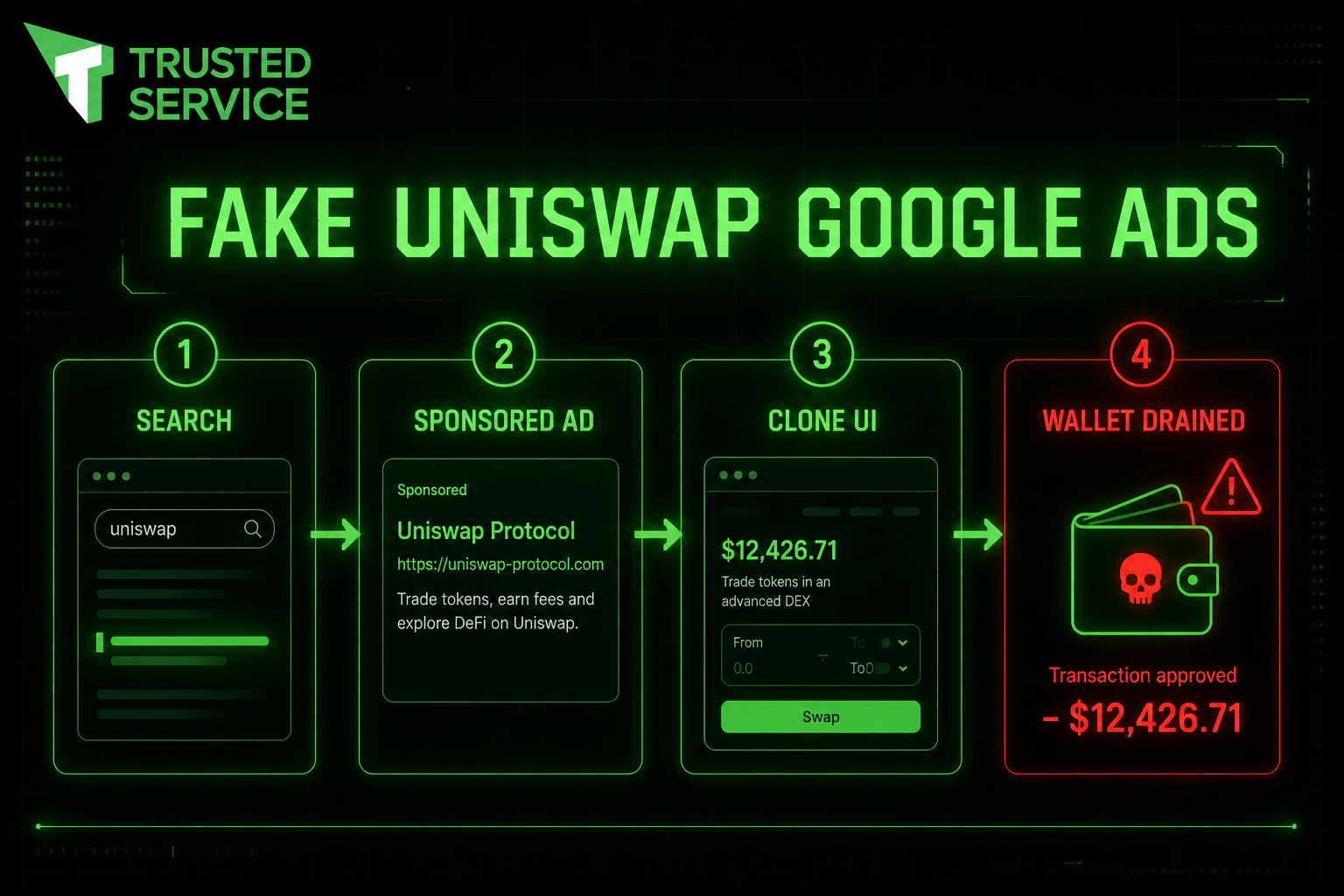
Схема почти всегда строится на клоакинге. Ботам или модерам в Google подсовывают страницу на вид с нормальным URL. Юзеру — клон. SEAL ещё с марта 2026 писала про «significant uptick»: за недели отсекли 356+ вредоносных ad-URL, Uniswap копировали чаще всех, рядом Morpho, PancakeSwap и другие жирные протоколы. И самый абсурд в том, это не потому что креатив гениальный. Потому что люди кликают первую ссылку и не смотрят на домен.
Клоакинг: что видит проверка Google и что видит пользователь

В мае волну разобрал on-chain аналитик b-block, а Cointelegraph и Crypto Briefing зафиксировали цифры: от $400 000 украденных средств, у атакующих в двух кошельках — порядка 146 ETH (~$306k на момент трекинга). Банят кабинет — поднимают другой. Меняют домен. Через какое-то время спонсорский слот снова занят. SEAL отдельно пишет, что после блокировки URL бэкенд часто сам поднимает свежее объявление и новый лендинг. Звучит примитивно, и это бесит сильнее всего: схема грубая, а работает.
Доверие тут продают чужое. Объявление сидит в Google, иногда вход идёт через «приличный» хост вроде sites.google.com / docs.google.com — SEAL прямо это фиксировала. Грязь прячется ниже: secondary iframe, fingerprinting, редиректы, отсев ботов. Ты видишь привычный UI. Пока не кликнул, антифрод часто смотрит вообще на другую картинку. Между 13 и 30 марта по связанным кампаниям SEAL насчитала около $1.27 млн потерь — это уже не «один кривой креатив».
К июлю Google поджал Circumventing Systems / Cloaking: если человеку и проверке показывают разное, кабинет могут снести без предупреждения (официальная политика). С 21 июля 2026 ещё и отрезали in-account апелляции по решениям старше шести месяцев — это подтверждает PPC Land и апдейт в Advertising Policies Help. Серым связкам стало теснее. Но это не мешает успеть завладеть средствами. Почему? описываем ниже.
Таймлайн: март — май — июль 2026

Исследователи пишут: сняли объявление — через минуты может висеть новое. Hayden Adams из Uniswap уже публично цеплял поисковые площадки за бездействие — об этом же пишут Crypto Briefing и Blockchain.News. По сути покупают верхнюю строку и продают ощущение, что ты на официальном сайте. Арбитраж какой-то кривой, но очень денежный.
В июле это уже плохо ложится в старую рамку «серый преленд». Тут бьют по живым деньгам в кошельках. И да, страдают не только новички: в майской волне фигурировал опытный трейдер @ika_xbt, у которого ушёл весь портфель после клика по Sponsored. Нормальные DeFi-юзеры тоже ведутся, когда рука сама тыкает в первую строку. Схема популярна и по сей день.
Спасибо за внимание. Рады делиться с вами свежими новостями!
ENGLISH VERSION
Hello, dear readers. We'd like to share a case that happened this summer.
Case Study: Someone Googles Uniswap or MetaMask , sees " Sponsored " at the top , the interface is "original," connects the wallet, and takes a couple of clicks. Then, the user's balance is zero.
How the scheme works: search → Sponsored → clone → conversion
The scheme is almost always based on cloaking. Bots or Google moderators are presented with a page with a seemingly legitimate URL. The user receives a clone. SEAL has been reporting on "significant uptick" since March 2026 : 356+ malicious ad URLs were filtered out in a matter of weeks , with Uniswap being the most copied, followed by Morpho , PancakeSwap , and other well-known protocols. And the most absurd thing is, it's not because the creative process is brilliant. It's because people click the first link and don't even look at the domain.
Cloaking : What Google's checker sees and what the user sees
In May, the on-chain analyst b-block analyzed the wave , and Cointelegraph and Crypto Briefing recorded the figures: $400,000 in stolen funds, with the attackers holding approximately 146 ETH (~$306k at the time of tracking) in two wallets . When one account is banned, another is activated. The domain is changed. After some time, the sponsorship slot is occupied again. SEAL specifically writes that after a URL is blocked, the backend often automatically pushes a fresh ad and a new landing page. It sounds primitive, and that's what's most infuriating: the scheme is crude, but it works.
They're selling someone else's trust here. The ad is hosted on Google, sometimes accessed through a "reputable" host like sites.google.com/ docs.google.com—SEAL has documented this directly. The filth is hidden below: secondary iframes, fingerprinting, redirects, bot filtering. You see the familiar UI. Until you click, the anti-fraud software often looks at a completely different image. Between March 13th and March 30th, SEAL calculated losses of about $1.27 million from related campaigns —this isn't just "bad creative."
By July, Google had tightened its Circumventing Systems/Cloaking rules : if a user's account and the verification process show different results, their account can be deleted without warning ( official policy ). Effective July 21, 2026 , in-account appeals for decisions older than six months were also cut off—this is confirmed by PPC Land and an update to Advertising Policies Help . Gray-hat networks have become more crowded. But this doesn't stop them from getting their hands on funds. Why? We explain below.
Timeline: March - May - July 2026
Researchers write: if you take down an ad, a new one might appear within minutes. Hayden Adams of Uniswap has already publicly criticized search platforms for inactivity— Crypto Briefing and Blockchain.News also report this . Essentially, they're buying the top spot and selling the perception that you're on an official website. Arbitrage is a bit shaky, but very lucrative.
In July, this no longer fits comfortably into the old "gray pre-landing" framework. This is where they're targeting real money in wallets. And yes, it's not just newbies who suffer: the May wave featured experienced trader @ika_xbt , whose entire portfolio was wiped out after clicking "Sponsored." Regular DeFi users also get hooked when their hand naturally clicks the first line.
The scheme remains popular to this day.